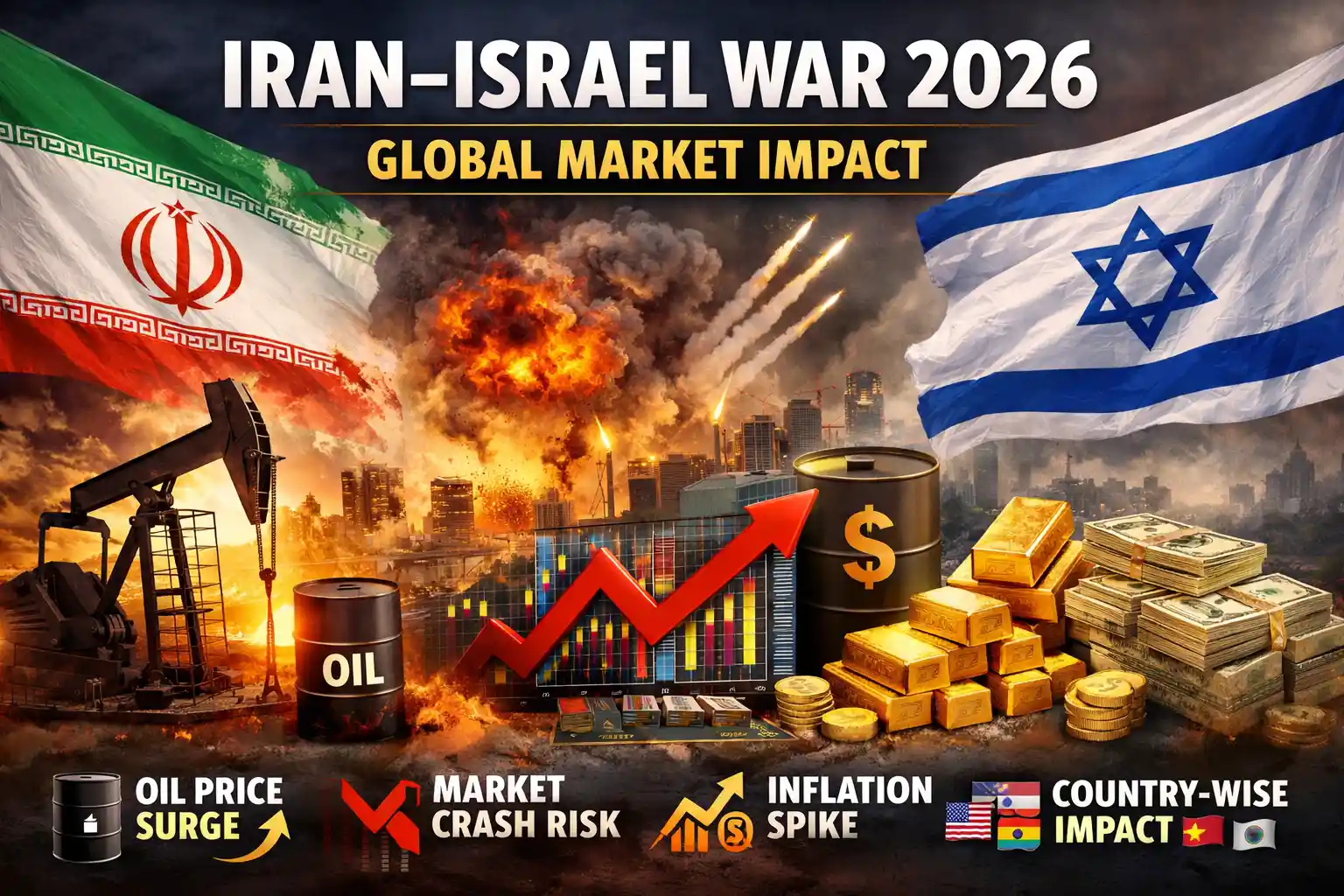
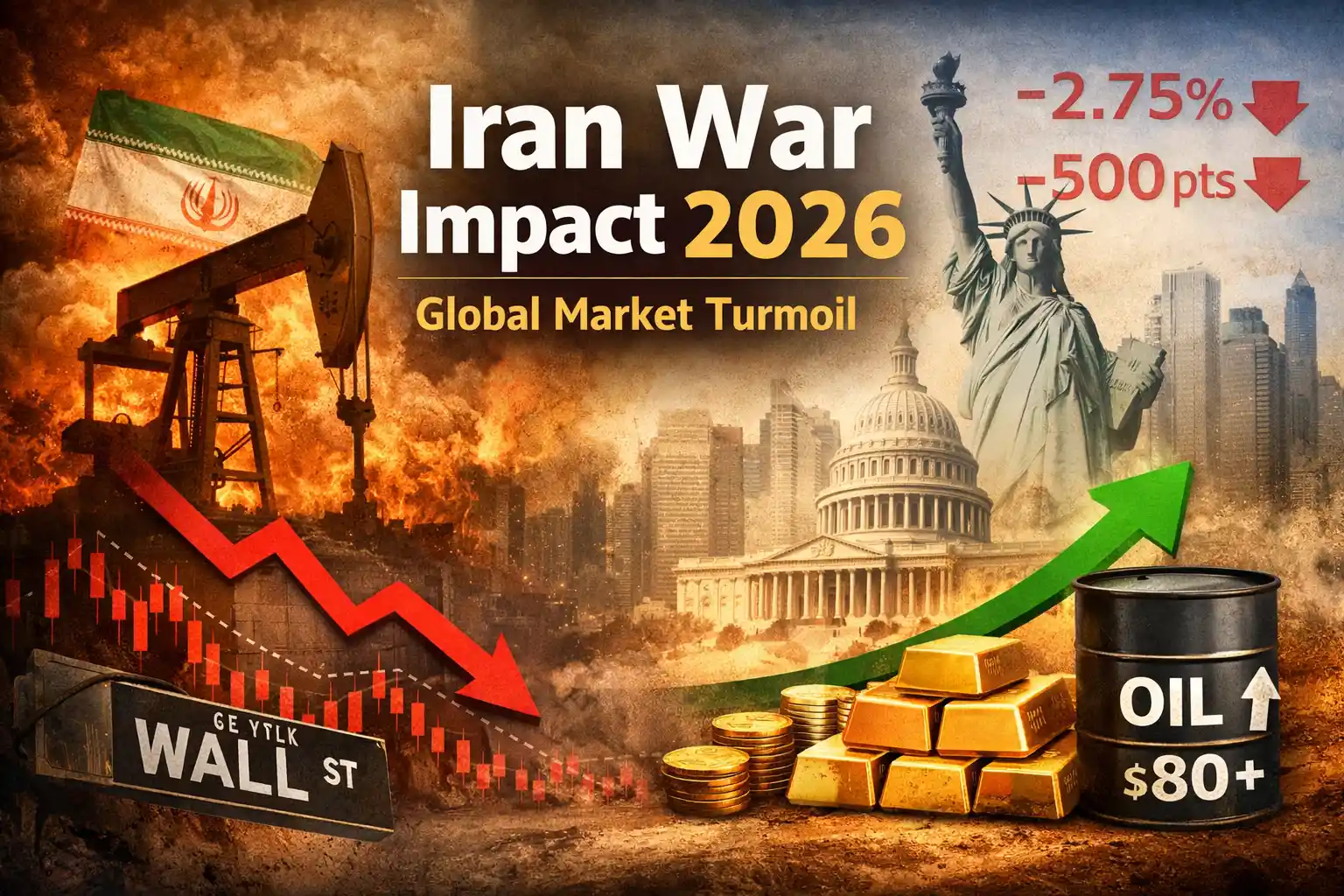
On 2 March 2026, global financial markets witnessed sharp volatility as escalating Iran-related war tensions in the Middle East triggered widespread uncertainty.
Whenever geopolitical conflict emerges in a key energy-producing region, the impact goes far beyond the battlefield — it directly affects oil prices, inflation expectations, currency movements, and equity markets worldwide.
This time was no different.
Oil prices surged, global stock markets fell sharply, gold rallied, and investors rushed toward safe-haven assets. The key driver behind all this movement was one word: uncertainty.
Oil Market – The Core Trigger of Volatility
🔺 Brent Crude Surges Sharply
- Brent crude jumped approximately 10–13%, reaching around $80–82 per barrel.
- This marked one of the strongest single-session gains in recent months.
⚠️ Strait of Hormuz Concerns
Nearly 20% of global oil supply passes through the Strait of Hormuz.
Any disruption or threat in this region creates immediate fears of supply shortages, pushing prices higher.
Sector Impact:
- Airlines under heavy pressure due to higher fuel costs
- Auto and paint sectors weakened
- Oil exploration and production companies gained
Energy markets became the primary transmission channel of geopolitical risk.
Global Equity Markets – Risk-Off Sentiment Dominates
United States
- Dow Jones and Nasdaq declined
- Technology and banking stocks faced selling pressure
- Investors shifted toward defensive sectors
Europe
- Major indices fell amid inflation concerns
- Rising energy costs raised economic slowdown fears
Japan & Asia
- Nikkei and Hang Seng traded lower
- Export-oriented companies came under pressure
The broader theme was clear: investors reduced risk exposure.
Indian Markets – Sharp Correction on Dalal Street
- Sensex dropped over 2700 points
- Nifty declined more than 500 points
Most Impacted Sectors:
❌ Aviation
❌ Auto
❌ Consumer discretionary
❌ Paint & tyre companies
Relatively Strong Areas:
✅ Oil exploration companies
✅ Select defense stocks
Foreign Institutional Investors (FIIs) reportedly increased selling, adding further pressure on Indian equities.
Safe-Haven Assets – Gold and Dollar Shine
- Gold rose nearly 2% as investors sought safety
- The US Dollar strengthened
- Bond yields showed volatility amid shifting risk sentiment
Whenever geopolitical uncertainty rises, capital typically flows into defensive and safe-haven instruments — and that pattern was clearly visible.
Market Forecast – When Could Stability Return?
The key question now is: How long will volatility persist?
Scenario 1: Conflict Remains Contained
If tensions do not escalate further:
- Markets may stabilize within 2–4 weeks
- Oil could consolidate between $75–85 per barrel
- Risk appetite may gradually return
Scenario 2: Conflict Escalates or Prolongs
If tensions intensify:
- Oil could move toward $100 per barrel
- Global inflation may rise again
- Central banks may delay interest rate cuts
- Equity markets could remain volatile for an extended period
Technical Perspective (India)
Indian indices are hovering near key long-term moving averages.
A breakdown below major support levels could trigger additional downside, while stability in oil may provide relief.
What Should Investors Do Now?
Avoid Panic Selling
Emotional decisions during volatility often lead to long-term losses.
Consider Defensive & Energy Themes
Potential areas of focus:
✔️ Oil & Gas Exploration
✔️ Defense
✔️ Gold ETFs
✔️ FMCG (Defensive consumer stocks)
⚠️ Sectors to Be Cautious About:
❌ Aviation
❌ High-debt companies
❌ Oil-import dependent industries
Continue SIPs for Long-Term Investors
Systematic investment plans during corrections can help average costs.
Maintain Some Cash Allocation
Holding 20–30% liquidity can provide flexibility to deploy funds at better valuations.
Long-Term Impact on India
India is a major oil importer. Prolonged high crude prices may:
- Increase fuel prices
- Push inflation higher
- Create pressure on the central bank
- Slow GDP growth momentum
However, if the geopolitical situation stabilizes quickly, markets may recover just as sharply as they corrected.
Final Summary – Key Takeaways
| Factor | Current Trend |
| Oil | 10–13% surge |
| Gold | Rising |
| Equity Markets | Correcting |
| US Dollar | Strengthening |
| Volatility | Elevated |
- Markets are currently driven more by sentiment than fundamentals.
- For long-term investors, corrections may create selective opportunities.
- Short-term traders should exercise caution and risk management.