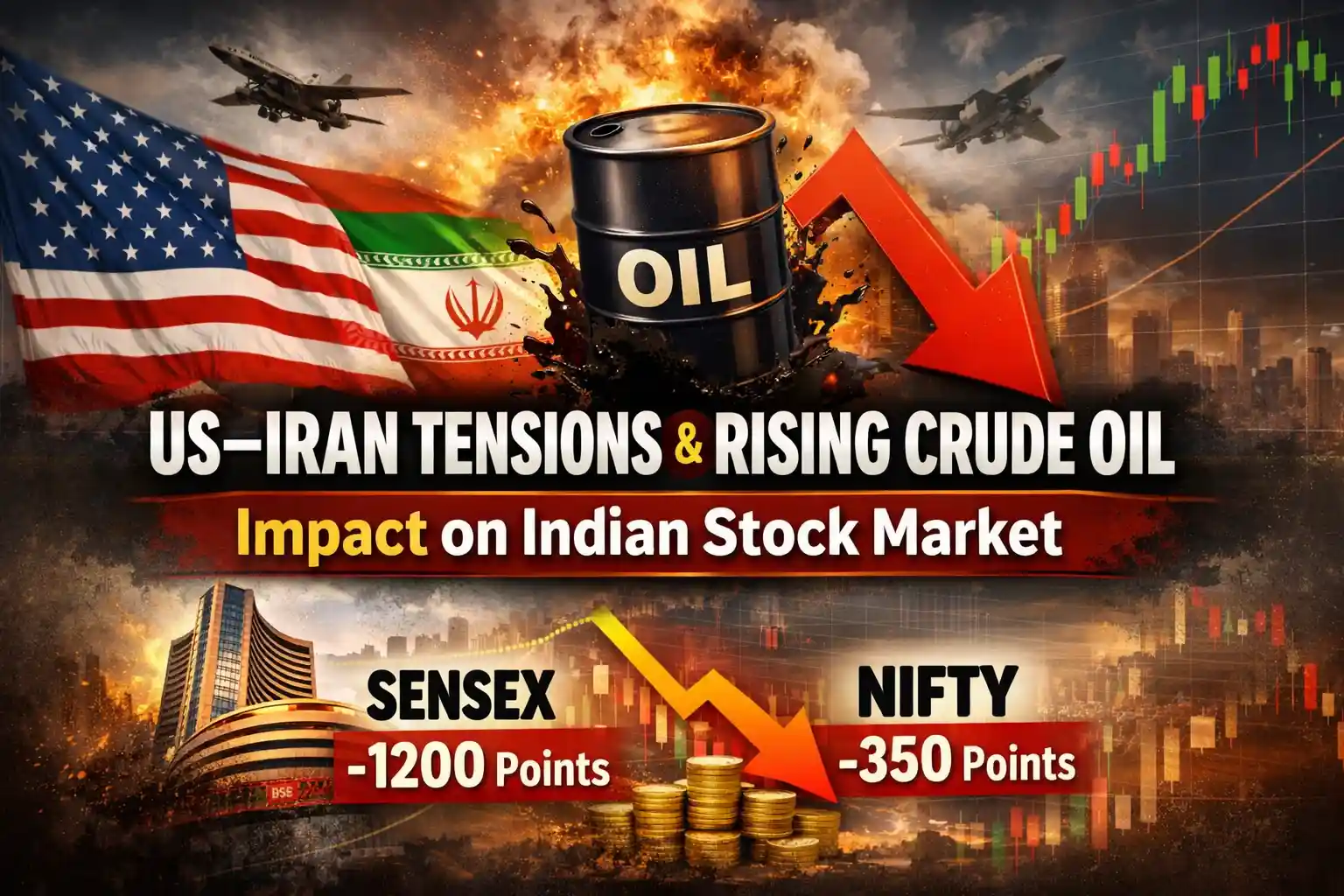
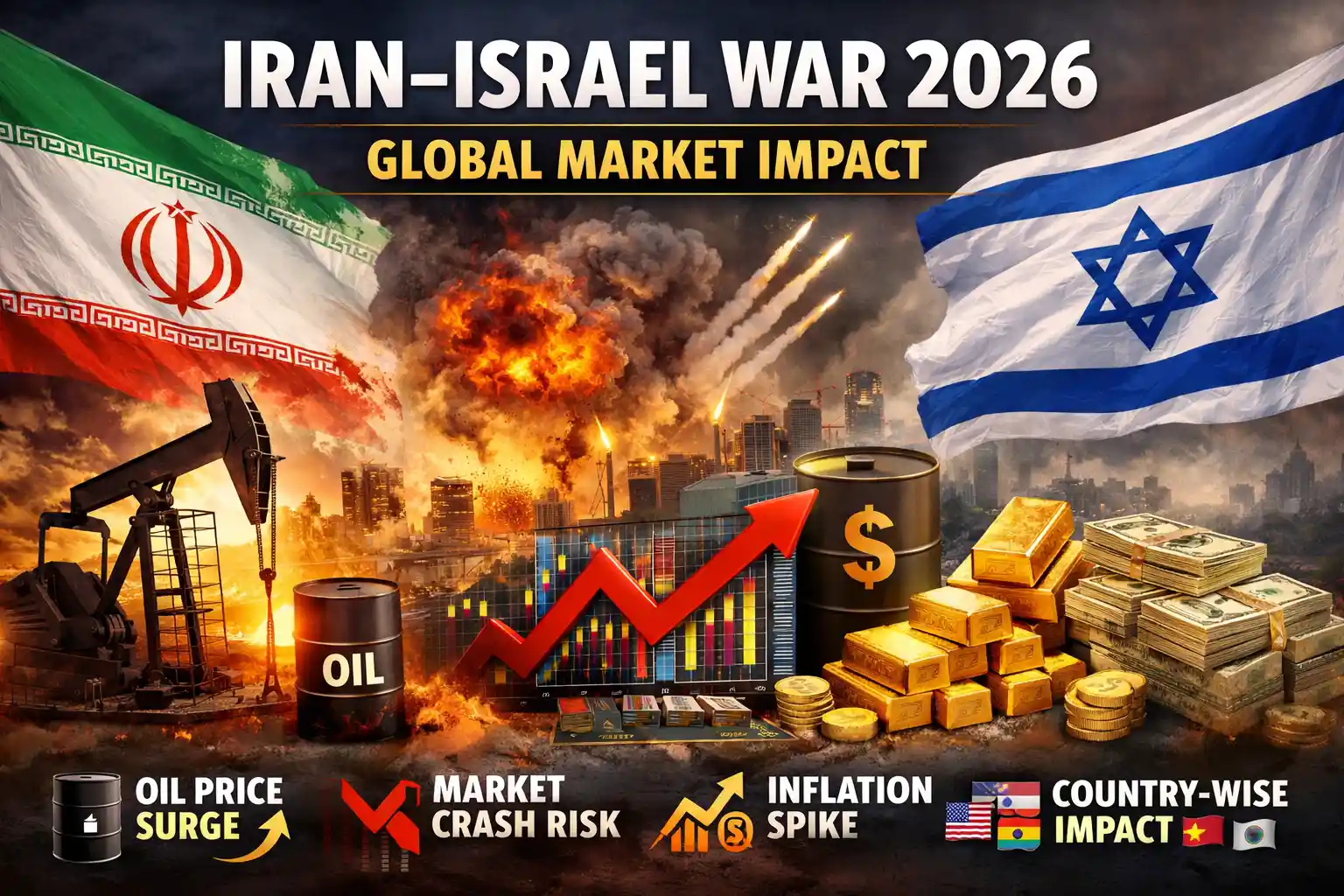
The direct military confrontation between Iran and Israel is not just a regional war. The Middle East is the heart of global energy supply, oil exports, and critical shipping routes.
If this conflict continues for a longer period or expands to involve major global powers, its impact could spread across:
- Oil prices
- Inflation
- Interest rates
- Currency markets
- Global stock markets
- Investor sentiment
Let’s break down the situation point-by-point with detailed explanations.
Impact on the Global Oil Market
🔹 Point 1: Strategic Importance of the Strait of Hormuz
Strait of Hormuz
Explanation:
Around 20% of the world’s total seaborne oil trade passes through this narrow waterway. If military activity increases or shipping becomes unsafe, oil tanker movement may slow down or stop temporarily. Even the fear of disruption can push oil prices sharply higher.
🔹 Point 2: Possible Oil Price Scenarios
Explanation (Scenario-Based):
- Limited conflict → $80–90 per barrel
- Regional escalation → $100–110
- Major disruption / Hormuz blockage → $120–140
Higher oil prices mean higher transportation costs, manufacturing costs, and overall inflation globally.
🔹 Point 3: Role of OPEC
OPEC
Explanation:
If Iranian supply declines due to war or sanctions, OPEC may attempt to increase production. However, global spare capacity is limited. A sudden supply shock could create a strong imbalance in demand and supply, leading to sustained price spikes.
Country-Wise Impact Analysis
United States
🔹 Energy Companies May Benefit
Higher crude prices increase revenue for U.S. oil producers.
🔹 Inflation Risk
Higher gasoline prices reduce consumer spending. Retail and technology sectors may face pressure.
🔹 Market Volatility
Indices like S&P 500 and Nasdaq may see short-term corrections as investors reduce risk exposure.
India
🔹 Rising Import Bill
India imports nearly 85% of its oil. Higher crude prices increase dollar outflow.
🔹 Pressure on the Rupee
Increased demand for dollars weakens the Indian rupee, making imports even more expensive.
🔹 Stock Market Risk
Foreign Institutional Investors (FIIs) may pull out funds during geopolitical uncertainty, increasing volatility.
China
🔹 Rising Manufacturing Costs
Energy-intensive industries will face higher costs.
🔹 Export Competitiveness
Higher production costs could reduce China’s export advantage.
Japan
🔹 Heavy Dependence on Imported Energy
Japan imports most of its energy. Higher oil prices increase industrial costs and pressure corporate margins.
European Union
🔹 Industrial Sector Pressure
Germany and France depend heavily on energy-intensive industries. Higher fuel costs may slow economic growth.
Sector-Wise Detailed Impact
Aviation Sector
🔹 Jet fuel prices will rise
➡ Fuel accounts for 30–40% of airline costs
➡ Profit margins shrink
➡ Ticket prices increase
➡ Travel demand may fall
Automobile Sector
🔹 Input costs rise
➡ Plastics, rubber, synthetic materials are oil-based
➡ Production costs increase
➡ Margins decline
Chemicals & Paints
🔹 Petrochemical raw materials become expensive
➡ Export margins reduce
➡ Profitability under pressure
FMCG Sector
🔹 Logistics and packaging costs rise
➡ Product prices increase
➡ Consumer demand may weaken
Banking Sector
🔹 Interest rates may remain high
➡ If inflation rises, central banks may delay rate cuts
➡ Loan growth may slow
Defense Sector (Potential Beneficiary)
🔹 Increased defense spending
➡ Governments may raise military budgets
➡ Defense companies could receive new contracts
Market Psychology During War
1️⃣ Panic Selling
Retail investors may sell quickly due to fear.
2️⃣ Shift to Safe Haven Assets
Gold and the U.S. dollar typically strengthen.
3️⃣ Sector Rotation
Capital shifts toward energy and defense sectors, while consumer and growth sectors weaken.
MARKET FORECAST (Next 3–6 Months)
Now the most important question: What could happen next?
Scenario 1: Controlled & Limited Conflict
- Oil: $80–95
- Global markets: 5–8% correction, then stabilization
- Energy & defense outperform
👉 Conclusion: Short-term volatility, long-term recovery possible.
Scenario 2: Regional Escalation
- Oil: $100–120
- Emerging markets may fall 10–15%
- Currencies like INR and CNY may weaken
👉 Conclusion: Defensive investment strategy required.
Scenario 3: Major Power Involvement
- Oil: $130+
- Global recession risk
- Equity markets may decline 15–25%
👉 Conclusion: This could create panic similar to past global crises.
Investment Strategy During Uncertainty
✔ Avoid panic selling
✔ Monitor crude oil prices closely
✔ Maintain portfolio diversification
✔ Consider limited exposure to energy and defense
✔ Continue long-term SIP strategies
✔ Keep some cash for volatility opportunities
Final Conclusion
The Iran–Israel conflict poses three major global economic risks:
1️⃣ Oil supply disruption
2️⃣ Rising inflation
3️⃣ Increased market volatility
If the conflict remains limited, markets may stabilize within months.
If it expands significantly, oil prices could surge beyond $120 and global markets may face sharp corrections.
The next 30–90 days will be crucial in determining global market direction.