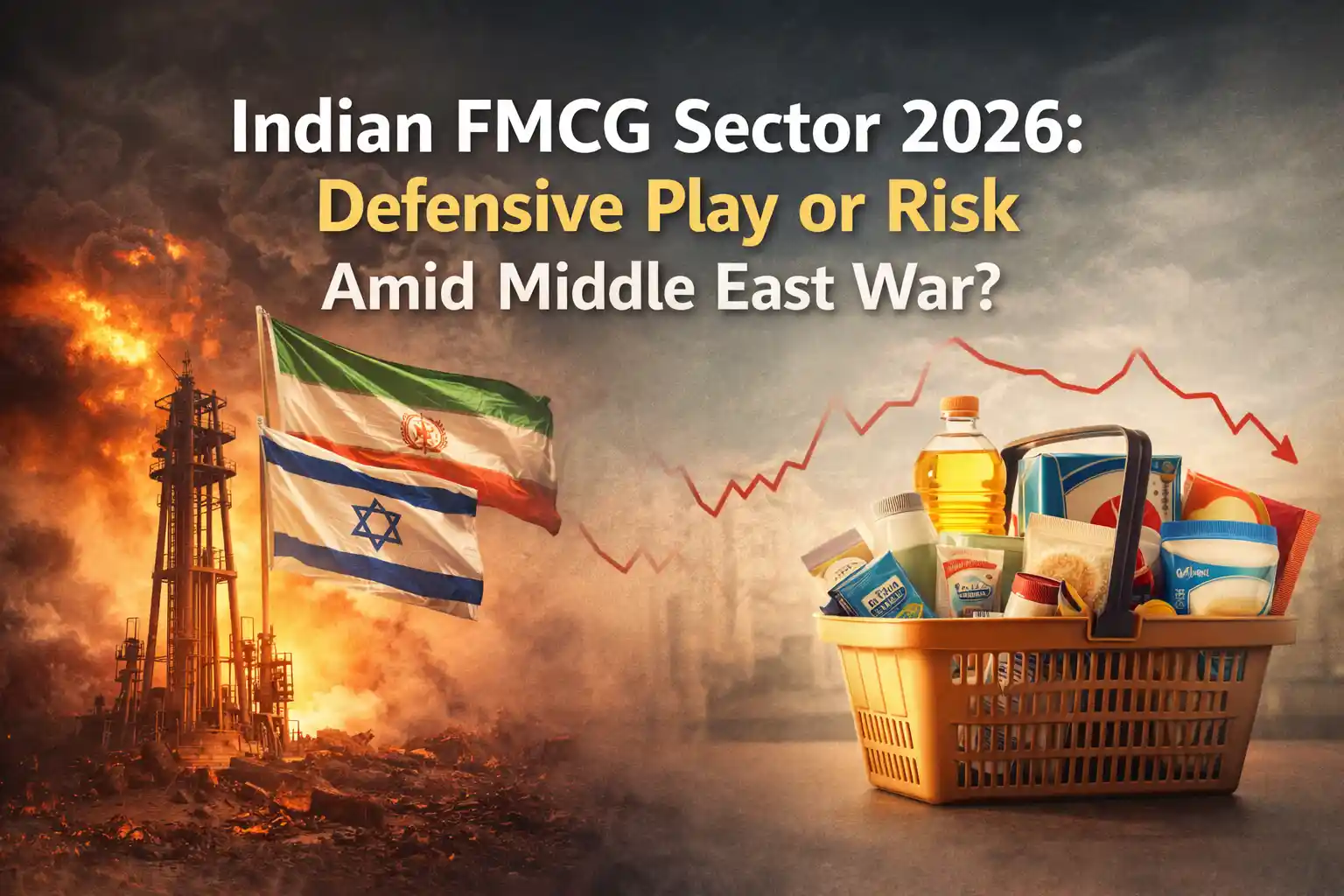
The conflict in the Middle East — particularly the escalation involving Iran and Israel — has triggered an 8% surge in Brent crude oil prices, pushing above $82 per barrel in early March 2026. This comes as a major risk for India’s economy because nearly half of India’s crude oil imports pass through the Strait of Hormuz.
As a result:
- Indian equity markets slid sharply
- The rupee weakened
- Inflation pressures intensified
These macro signals matter deeply for consumer businesses like FMCG.
Latest Indian FMCG Market Data (2025-26)
Sector Scale & Growth
- The Indian FMCG market was valued at about US$ 615+ billion (around ₹53 trn) as of 2025.
- Sector growth is supported by volume recovery, rural demand, and easing commodity inflation.
Value & Volume Trends (FY26)
- FMCG companies expect high single-digit volume growth in 2026 as inflation stabilizes and GST reforms take effect.
- Volume-led growth is now a priority, not just value growth driven by price hikes.
- Some reports mention FMCG sales rebounding strongly in Q4 thanks to festive demand and easier raw material costs.
Rural vs Urban Dynamics
- Rural demand has consistently outpaced urban in 2025-26, driving broader FMCG growth.
- Smaller towns and semi-urban markets are now contributing significantly to retail spending growth.
- Premium FMCG products share in rural India has grown to 42% of total premium sales, showing rising consumption beyond merely low-priced goods.
Why FMCG Still Looks Defensive
Here’s what data and industry sentiment are showing:
✅ Stable & Necessary Demand
Even with economic uncertainty, FMCG includes everyday essentials — food staples, personal care, home care — for which households spend first. Rural consumption is resilient and often less price-sensitive than other discretionary categories.
✅ Volume Recovery Possible
With GST rationalization, improved inflation outlook, and cost easing, companies expect better volume growth in FY27 (2026-27) than recent years. This trend implies demand is not collapsing, just shifting — especially toward value packs and rural markets.
✅ Pricing and Margin Strategy
FMCG firms often have the ability to pass on some cost increases (e.g., packaging) to consumers without major volume loss — though there are limits. Small price hikes are already visible across categories.
War-Linked Risks to FMCG Defensive Status
🔹 Higher Input Costs
Crude oil impacts are direct: packaging materials like HDPE and other polymers — tied to oil derivatives — account for 15–20% of manufacturing costs in detergents, soaps, edible oils, etc.
When oil prices jump (as seen due to current conflict), input costs rise, squeezing profit margins if companies cannot fully pass them on.
🔹 Consumer Price Sensitivity
Rapid price increases in staples can reduce volume demand. Amid inflation, consumers often switch to smaller packs, cheaper brands, or reduce discretionary FMCG purchases — a pattern known as downtrading.
🔹 Competing Local & Regional Brands
While large FMCG companies remain strong, there’s rising competition from regional brands and direct-to-consumer players, especially in price-sensitive segments.
Sector Outlook: Growth & Challenges Together
🔹 Country Growth Helps Demand
India’s economy remains relatively resilient, with positive indicators like strong domestic demand and projected higher rural incomes even amid global oil shocks.
🔹 Dual Growth Engines
Some analysis suggests a “dual engine” scenario — rural demand still driving FMCG, while urban consumption begins to revive after GST and fiscal easing.
However, risks persist if war-related inflation accelerates or if global oil supply chains remain disrupted.
2026 Perspective
So can FMCG still be considered a defensive investment in 2026?
Yes, But With Conditions
✔ Essentials demand remains steady even in uncertainty
✔ Rural and small town demand supports volume growth
✔ Value-pack and affordable products cushion modest price inflation
However…
✖ Input cost surges from rising crude prices may pressure margins
✖ Competition and downtrading can limit pricing power
✖ Market valuations are relatively high for some FMCG stocks
Final Verdict:
The Indian FMCG sector retains many defensive characteristics in 2026, particularly in essentials and broad consumption categories. However, it is not 100% immune to macroeconomic shocks like war-induced oil price spikes and inflation. Investors should therefore combine sectoral defensive qualities with selective stock analysis — focusing on companies with strong pricing power, deep rural reach, and efficient supply chains.