हिंदी में पढ़ने के लिए मेनू बार से हिंदी भाषा चयन करें।
Introduction:
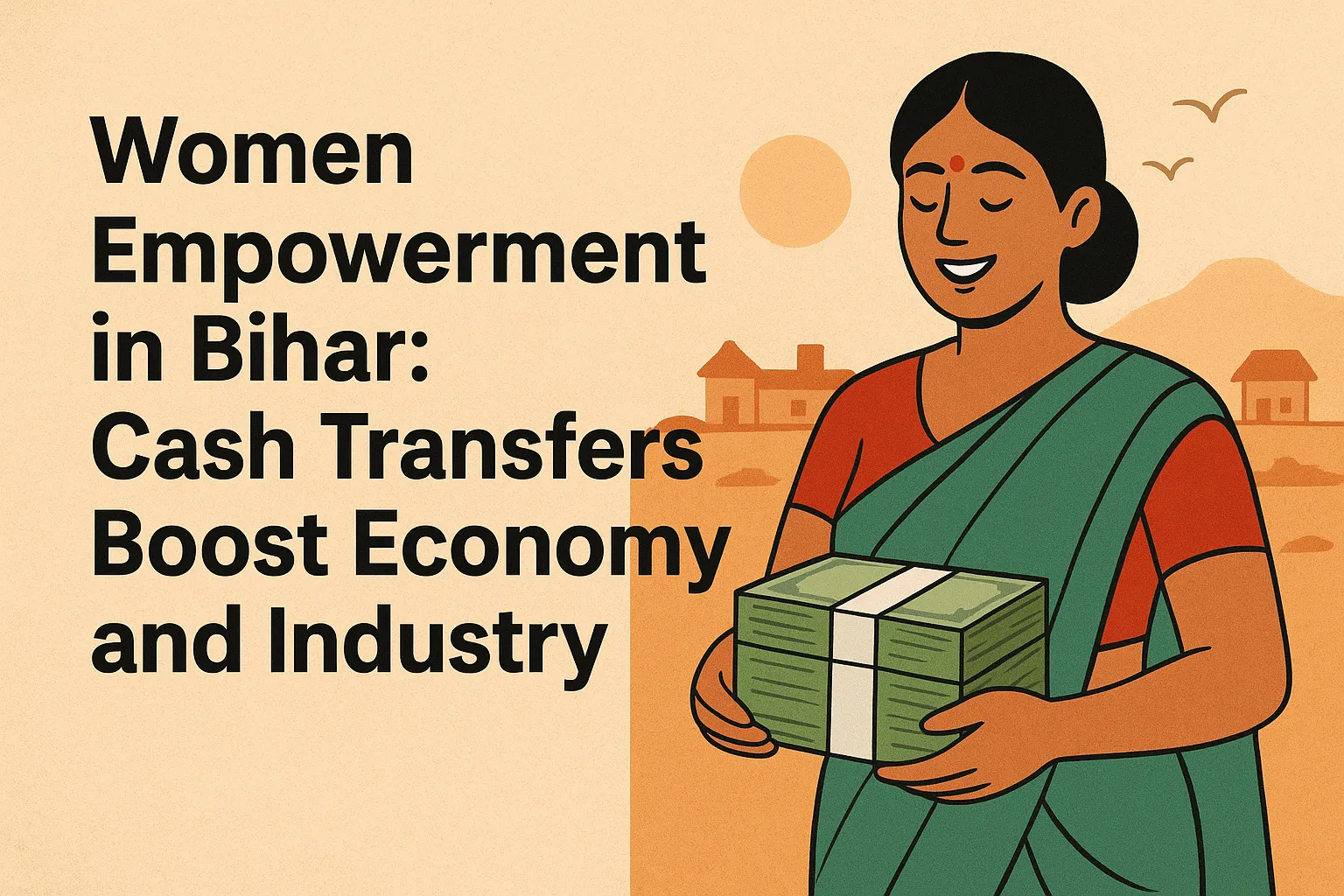
Economic empowerment of women in India is a key social and economic reform that not only strengthens the status of families but also significantly contributes to local and national economies. In Bihar, the direct cash transfer of ₹10,000 to women has brought transformative changes, impacting their personal lives, local production, industry, and economic activity. This study delves into the multi-dimensional effects of this initiative, examining how cash transfers influence local markets, industries, production, and rural economies, as well as the effect on women’s economic activity and civic participation. The analysis focuses purely on economic and social aspects without any political considerations.
Immediate Impact of Cash Transfers on Bihar’s Local Economy:
The immediate effect of depositing ₹10,000 directly into women’s bank accounts was observed in increased household spending. In rural and semi-urban areas, the funds were primarily spent on:
- Groceries and daily necessities
- Clothing and household items
- Health and personal care products
- Small services and utility payments such as electricity, water, and mobile recharge
This consumer expenditure increased the flow of cash in local markets, boosting sales for small shopkeepers, grocery stores, clothing retailers, and service providers. The collective spending power of millions of women generated a significant demand, stimulating regional economic activity and creating local employment opportunities.
Micro-Investments and Women’s Entrepreneurship:
The cash transfer encouraged many women to invest in small-scale businesses using the funds. The types of investments included:
- Cottage industries and handicrafts
- Tailoring, stitching, beauty, and wellness services
- Poultry, livestock, and small-scale agriculture
- Home-based food processing such as pickles, papads, and snacks
These small investments promoted local entrepreneurship, increased employment, improved household incomes, and strengthened local supply chains, energizing Bihar’s rural economy.
Household Multiplier Effect:
In families with multiple adult women (typically 2–4), when one woman received a cash transfer:
- The entire household benefited financially
- Other women were motivated to participate in similar economic activities
- Total family expenditure increased, benefiting local markets and industries further
This multiplier effect significantly amplified the real impact of each cash transfer, becoming a vital catalyst for rural economic activity.
Broader Impact on Production and Industry:
The cash transfers had a profound effect across various economic sectors in Bihar:
a) Retail and Micro-Retail:
Increased household spending boosted sales in groceries, clothing, beauty products, and household items, creating revenue growth and expansion opportunities for small retailers.
b) Service Sector:
Demand for salons, tailoring, tutoring, transportation, and other local services rose, increasing local employment and providing women with greater opportunities for active participation in the service industry.
c) Agriculture and Allied Production:
Women invested in poultry, livestock, and small-scale farming, boosting local production and improving food supply chains, benefiting farmers and local agricultural markets.
d) Cottage Industry:
Handicrafts, pickles, stitching, beauty services, and other home-based industries expanded, fostering skill development and enabling women to promote home and local industries.
e) Financial Services:
Cash transfers through DBT increased access to banking, improving digital payment adoption and financial literacy among women, promoting rural financial inclusion in the long term.
Women’s Economic Activity and Voting Participation:
In Bihar, regions receiving cash transfers saw women’s voter turnout approximately 10% higher than men. Economically, this indicates that when women are financially empowered:
- Their confidence and self-reliance increase
- They become more active in family and community decision-making
- Their contribution to social and civic participation rises
This demonstrates a positive correlation between economic empowerment and civic engagement.
Long-Term Effects and Sector-Wise Analysis:
The long-term impact of cash transfers on Bihar’s economy is evident:
- Increased demand led to growth in production and employment
- Improved household income boosted savings and investment
- Expansion of small businesses and micro-entrepreneurship occurred
- Local supply chains developed and diversified
Key Affected Sectors:
- Retail and local markets
- Service sector (beauty, tailoring, tutoring, transportation)
- Agriculture and allied production
- Cottage and home-based industries
- Financial and digital services
Regional Observations in Bihar:
Field reports indicate that after cash transfers:
- Activity in local markets increased
- Small shops and businesses expanded
- Women actively participated in home-based and cottage industries
- Banking and digital payment adoption among women improved
- Families’ capacity to spend and invest increased
Broader Implications and Future Strategy:
The experience in Bihar shows that targeted cash transfers to women strengthen state economies, production, and industries. If similar strategies focusing on women are adopted in other backward states in India:
- Local industries and agricultural production can increase
- Women’s economic participation will rise, making families and communities more self-reliant
- Household spending and savings will strengthen economic activity
- Financial literacy and banking adoption will improve
- State economic structure and production capacity will be enhanced
Such women-focused economic strategies not only strengthen state economies but also contribute significantly to India’s overall economic growth, inclusive development, and self-reliance.
Outcome
Cash transfers to women in Bihar led to significant changes in household spending, consumer activity, production, industry, and social participation. The experience demonstrates that targeted financial empowerment not only improves women’s lives but also strengthens local and national economies. Implementing similar strategies in other backward states can enhance economic empowerment, production, and industry, contributing to India’s overall growth and self-reliance.