Crude oil is often called the backbone of the global economy. From petrol and diesel to aviation, transportation, manufacturing, and electricity generation — almost every sector is directly or indirectly influenced by oil prices.
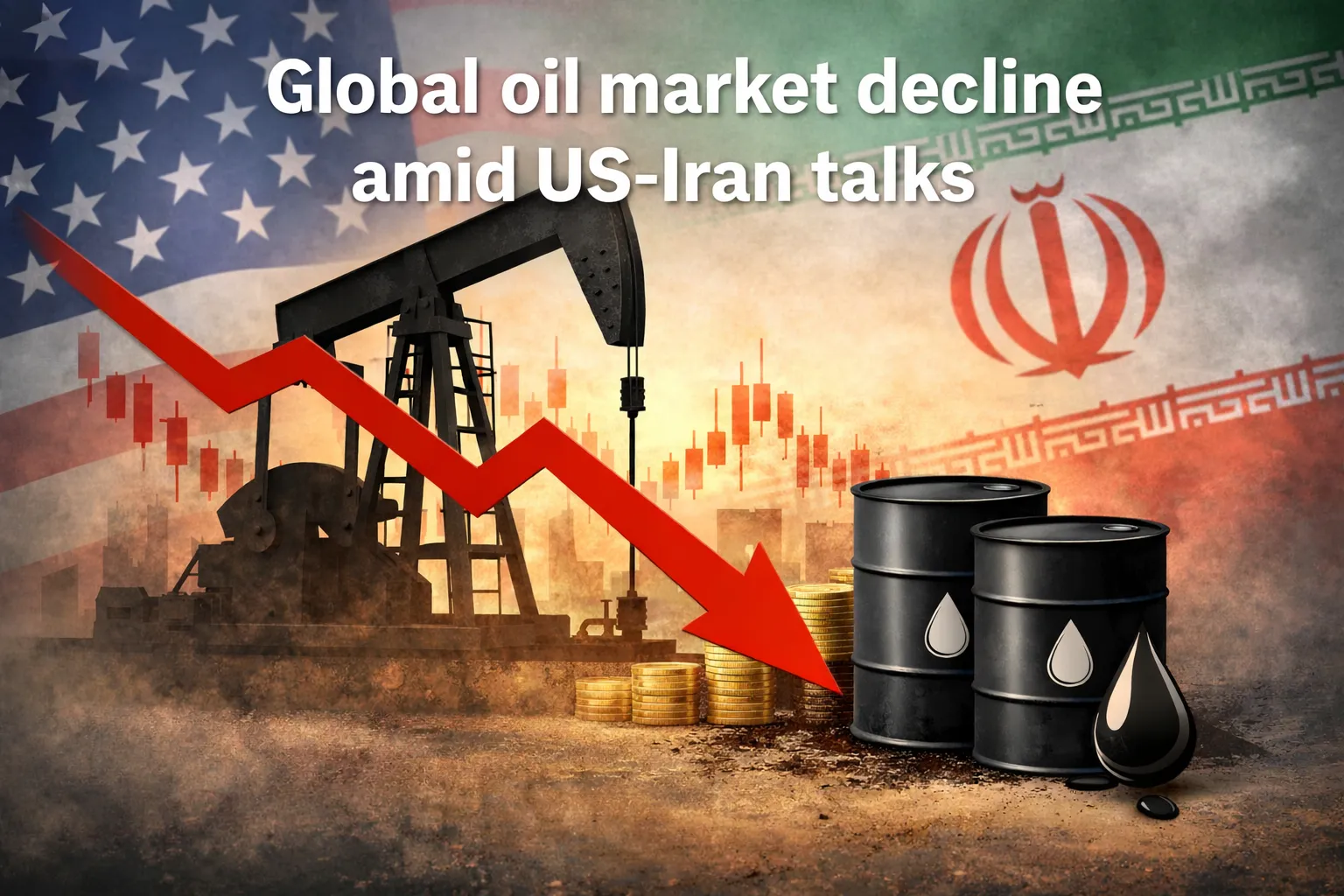
Currently, the global oil market is witnessing sharp volatility. On one hand, diplomatic talks between the United States and Iran are easing geopolitical tensions. On the other hand, fresh tariff concerns and global economic uncertainty are putting pressure on demand expectations.
As a result, oil prices are trading under pressure. Let’s understand the complete situation in simple and clear language with the latest available data.
What Are the Latest Oil Prices?
- Brent Crude: Around $71 per barrel
- West Texas Intermediate (WTI): Around $65–66 per barrel
Oil prices recently slipped by nearly 1% in the latest trading session. Just a few days ago, Brent crude was near a six-month high, but easing geopolitical concerns triggered profit booking and price correction.
👉 In short, the market is currently swinging between “fear and relief.”
How Are US-Iran Talks Affecting Oil Prices?
Diplomatic discussions between the United States and Iran regarding nuclear-related issues have recently gained attention.
What is the direct impact?
- Reduced probability of military conflict in the Middle East
- Lower risk of supply disruption
- Decrease in the “risk premium” added to oil prices
When geopolitical tensions decline, traders remove the extra premium they had priced in due to war risks. This often leads to a fall in crude prices.
Therefore, news of renewed talks has eased supply fears and pushed prices lower.
Impact of Tariffs and Global Economic Uncertainty
Apart from geopolitics, economic policy is also influencing oil prices.
The United States has recently increased certain import tariffs, creating concerns about slower global trade growth.
How does this affect oil?
- Higher tariffs may slow global trade
- Slower trade reduces industrial production
- Lower production decreases energy demand
- Lower demand puts pressure on oil prices
👉 Simply put: If global growth slows, oil consumption may decline — leading to weaker prices.
Why the Strait of Hormuz Matters
A key global oil chokepoint is the Strait of Hormuz.
Nearly 20% of the world’s oil supply passes through this narrow sea route.
If any disruption occurs here:
- Supply could drop sharply
- Oil prices could spike above $100 per barrel
At present, diplomatic developments are keeping the situation relatively stable, but the region remains strategically sensitive.
Recent Trend: Rally Followed by Correction
- Oil prices earlier climbed close to a six-month high due to rising tensions.
- Geopolitical fears drove speculative buying.
- Later, news of diplomatic engagement triggered selling pressure.
This clearly shows that the oil market is currently highly volatile.
Even minor headlines can cause sharp price swings.
Impact on Import-Dependent Countries Like India
Countries that import large volumes of crude oil, such as India, are highly sensitive to global price movements.
If oil remains cheaper:
- Lower fuel inflation
- Reduced import bill
- Stable currency
- Better macroeconomic balance
If oil spikes:
- Higher petrol and diesel prices
- Rising inflation
- Pressure on government finances
- Weakening currency
Thus, oil prices play a crucial role in economic stability.
What Could Happen Next? (Future Outlook)
✔️ Scenario 1: Diplomatic Success
If US-Iran talks progress positively:
- Supply risks decline further
- Brent may trade in the $65–68 range
- Market volatility may reduce
❌ Scenario 2: Rising Tensions
If negotiations fail or conflict escalates:
- Supply disruption fears rise
- Oil could move toward $75–100+
Currently, the market remains in a “wait-and-watch” mode.
Outcome
The global oil market is currently influenced by two major forces:
- Diplomatic engagement between the US and Iran, easing geopolitical tensions
- Economic uncertainty and tariff concerns, weighing on demand expectations
With Brent trading near $71 and WTI around $65–66 per barrel, prices have softened after a recent rally.
Going forward, oil price direction will largely depend on:
- The outcome of US-Iran negotiations
- Global economic growth trends
- Stability in the Middle East region
👉 In summary, the market remains sensitive and volatile, and investors must closely monitor geopolitical and economic developments.
(Analysis based on available market data and current global economic developments.) oilprice