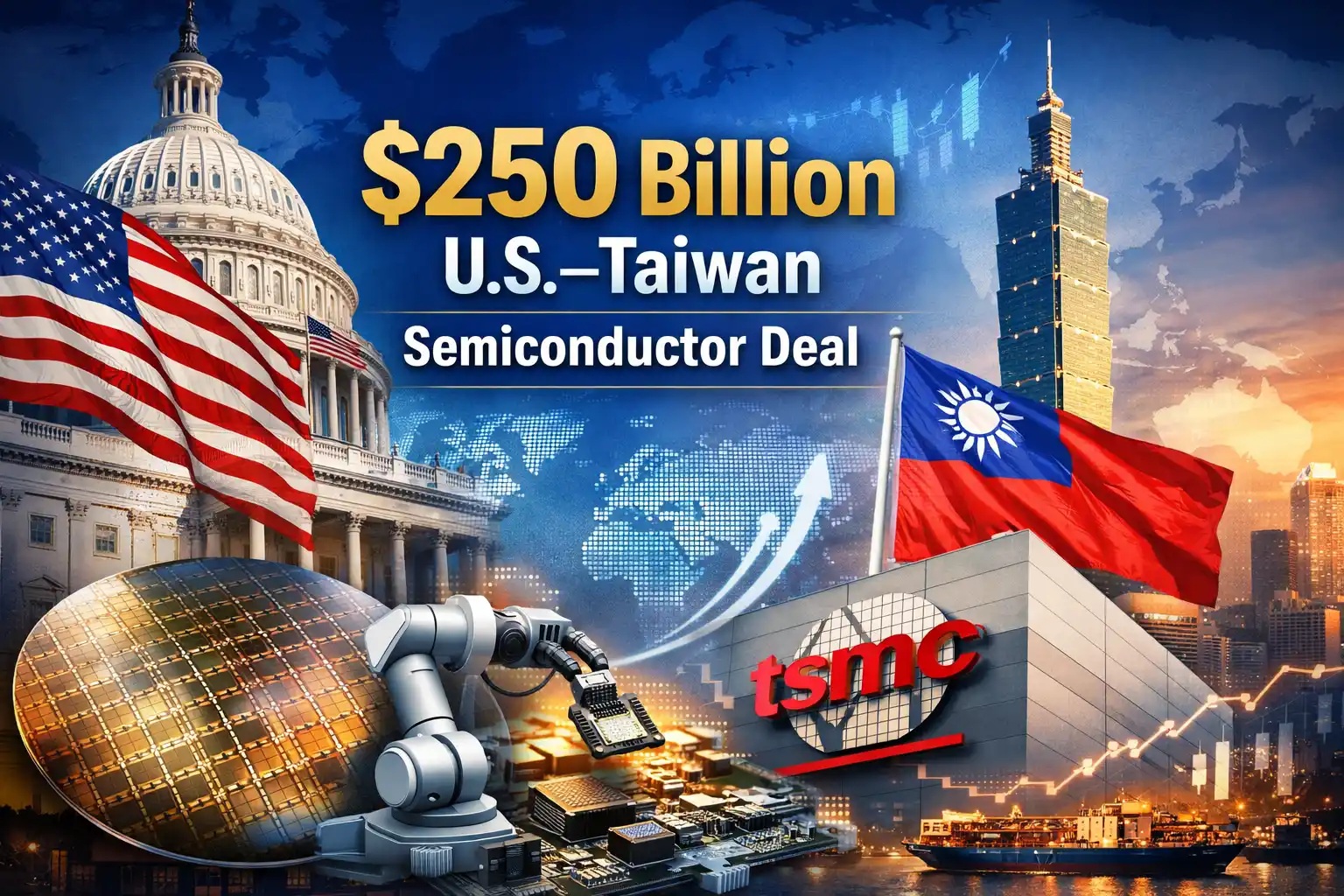
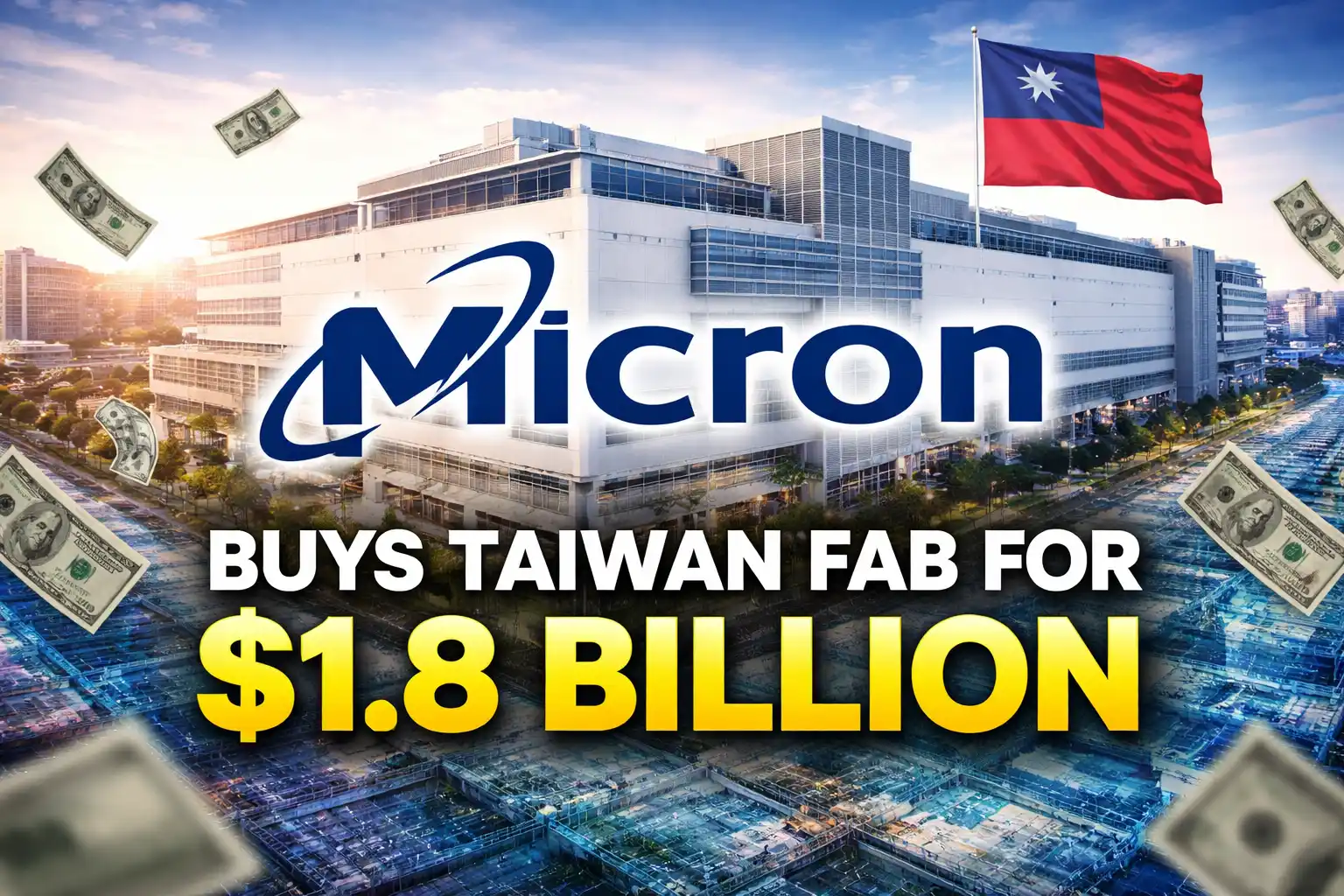
U.S.-based semiconductor company Micron Technology, Inc. has signed a Letter of Intent (LOI) to acquire the P5 fab of Powerchip Semiconductor (PSMC) in Taiwan for $1.8 billion. This move is part of Micron’s strategy to expand global DRAM and high-performance memory chip production.
Company Overview
Micron Technology is a leading global manufacturer of memory and storage chips. Its primary products include:
- DRAM (Dynamic Random-Access Memory) – for high-speed computing and data centers
- NAND Flash – for mobile devices and SSD storage
- HBM (High-Bandwidth Memory) – used in AI applications and supercomputers
Headquartered in Boise, Idaho, USA, Micron trades on NASDAQ under the MU ticker. The company competes with major global memory chip makers like Samsung and SK Hynix.
Deal Details
Micron will acquire the P5 fab in Tongluo, Miaoli County, Taiwan, a facility spanning approximately 300,000 square feet with advanced cleanrooms.
- Deal value: $1.8 billion (cash)
- Regulatory approval: Expected by Q2 2026
- Production start: Second half of 2027
- Strategic partnership: Micron and Powerchip will collaborate on post-wafer assembly and production operations
Micron’s Global Expansion Strategy
This acquisition strengthens Micron’s global presence and production capacity. Expanding in Taiwan provides a strategic foothold in the Asia-Pacific market and complements Micron’s New York megafab initiative in the U.S.
DRAM & HBM Production Planning
Micron plans to ramp up DRAM and HBM memory production in phases starting next year. HBM and DRAM chips are critical for AI workloads, GPUs, and data center applications, and the new fab will leverage advanced fabrication technology.
Micron-Powerchip Partnership
The collaboration between Micron and Powerchip on post-wafer assembly and operations will improve production efficiency and yield, supporting long-term growth and operational synergy.
Global DRAM Market Impact
The acquisition is expected to influence the global DRAM supply and pricing. Analysts suggest the new production capacity could alleviate tight DRAM supply conditions worldwide by 2027.
AI & Cloud Computing Memory Demand
With AI and cloud computing adoption rising, DRAM and HBM demand is surging. Micron aims to meet this demand and strengthen its position in high-performance computing through this strategic investment.
Semiconductor Supply Chain Trends
Taiwan fabs play a crucial role in the global semiconductor supply chain. Micron’s acquisition will strengthen both Asia-Pacific and U.S. supply chains, reflecting the trend of fabs as strategic assets in the industry.
Stock Market & Investor Reaction
- Powerchip shares: surged nearly 10% following the announcement
- Micron shares: saw positive momentum
Investors viewed the acquisition as a positive signal for Micron’s long-term growth and its positioning in the AI memory market.
Geopolitical & Policy Implications
The deal highlights Taiwan-USA-China semiconductor dynamics. Advanced memory chip technology is subject to export regulations, and both Taiwan and U.S. government approvals are critical for completion.
Fabrication Technology & Capacity
The P5 fab includes advanced cleanrooms and state-of-the-art DRAM and HBM production technology. The new facility will be capable of meeting increasing AI, cloud, and HPC memory demands.
Competitor Analysis
This acquisition may affect competitors like Samsung, SK Hynix, and other DRAM/HBM manufacturers, as it alters the global supply and competition dynamics.
Financial Analysis of $1.8B Investment
Micron’s $1.8 billion investment is expected to impact long-term ROI, production costs, and revenue growth. Analysts view it as a strategic investment driven by AI and HPC demand trends.
Future M&A Trends in Semiconductors
Micron’s acquisition may set a precedent for further consolidation and strategic mergers in the semiconductor industry, with additional acquisitions and partnerships likely in the coming years.
Summary in Simple Terms
Micron’s purchase of the Taiwan chip plant strengthens its memory chip production capabilities and positions the company to meet growing AI and high-performance computing demands. The deal is expected to complete by Q2 2026, with production starting in the second half of 2027. This move also positively impacted stock prices and reinforces Micron’s long-term global strategy.
Source: micron news