Why does the market get nervous?
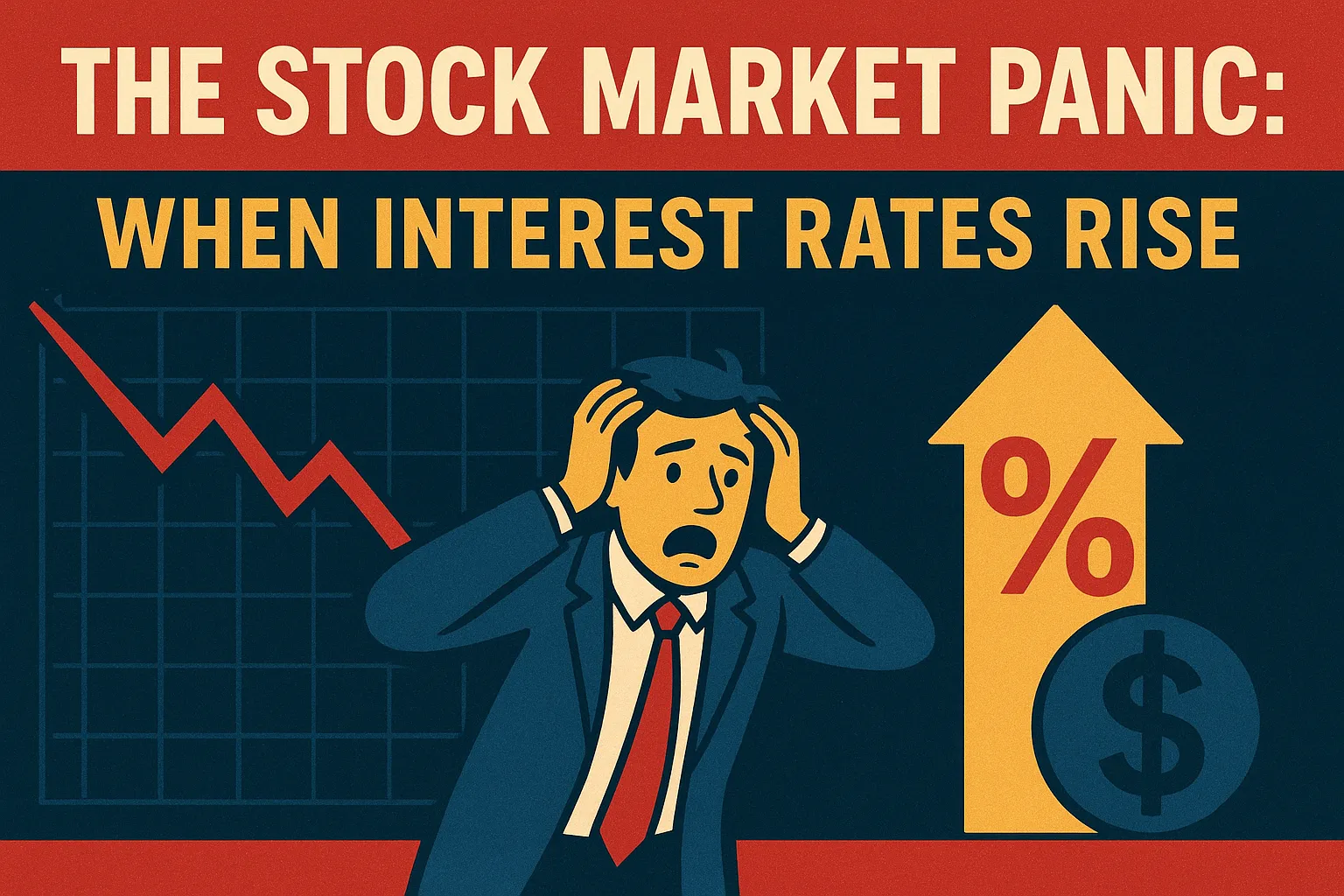
The stock market may look highly technical from the outside, but at its core, it runs on human emotions — fear and greed.
Whenever news breaks that
“Interest rates may rise,”
the market reacts as if a warning siren has gone off.
Stock prices start falling, volatility increases, and investors become anxious — even before interest rates actually rise.
But here’s the real question:
If interest rate hikes are meant to control inflation and stabilize the economy, why does the market panic so quickly?
The answer lies in how higher interest rates affect money flow, company profits, consumer spending, and investor behavior — all at the same time.
Higher Interest Rates Mean Money Becomes Expensive
Interest rates are essentially the price of money.
When a central bank raises interest rates:
- Borrowing becomes more expensive
- Loans and EMIs increase
- Easy money disappears from the system
This immediately slows down the movement of money in the economy.
Businesses think twice before borrowing, and individuals become cautious about spending.
The market understands this slowdown in advance — and that’s where fear begins.
🏭 Rising Interest Rates Put Pressure on Company Profits
Stock prices are driven by future earnings, not past performance.
When interest rates rise, companies that depend heavily on loans face higher interest expenses.
Imagine a company with:
- ₹100 crore in loans
- Paying 8% interest earlier
If the rate rises to 10%, the company now pays an extra ₹2 crore every year — purely as interest.
That additional cost directly reduces profits.
Lower profits lead to:
- Lower earnings per share (EPS)
- Slower growth expectations
- Pressure on share prices
The market quickly factors in this future pressure, which is why stocks often fall even before the actual impact is visible in financial results.
🏠 Higher EMIs Reduce Consumer Spending
Interest rate hikes don’t just impact companies — they hit households directly.
When rates rise:
- Home loan EMIs increase
- Car and personal loans become costlier
- Monthly budgets get tighter
If income stays the same but EMIs rise, people naturally cut down on discretionary spending.
This affects sectors such as:
- Automobiles
- Real estate
- Consumer electronics
- Retail and lifestyle businesses
Lower consumer spending leads to weaker demand, slower sales growth, and reduced profitability — something the market fears deeply.
Fixed Returns Start Looking More Attractive Than Stocks
One major psychological shift occurs during rising interest rate cycles.
As interest rates increase:
- Fixed deposits offer higher returns
- Bonds provide better yields
- Debt instruments appear safer
Many investors begin asking:
“Why take stock market risk when I can earn decent returns safely?”
This leads to a shift of money from equities to fixed-income instruments.
When funds move out of stocks:
- Liquidity decreases
- Selling pressure rises
- Market sentiment turns negative
This flight from risk to safety is one of the biggest reasons markets fall during rate hikes.
🌍 Foreign Investors Often Change Their Strategy
Interest rate changes also impact global money flows.
When interest rates rise in developed economies (especially the US):
- Government bonds become more attractive
- The US dollar strengthens
- Global investors prefer safer assets
Foreign Institutional Investors (FIIs) often pull money out of emerging markets like India and move it to safer destinations.
Large-scale foreign selling causes:
- Sharp market declines
- Currency pressure
- Increased volatility
This adds another layer of fear to the domestic market.
🧠 The Market Thinks About the Future, Not the Present
One crucial thing to remember:
The stock market always prices the future, not the present.
An interest rate hike signals:
- Possible economic slowdown
- Tight financial conditions
- Lower growth ahead
Even if companies are currently performing well, the market worries about what the next 6–12 months might look like.
This forward-looking nature explains why markets often fall on expectations, not just on actual outcomes.
📉 Are Higher Interest Rates Always Bad for the Market?
Not necessarily.
In the long run:
- Higher interest rates help control inflation
- They prevent excessive borrowing
- They promote sustainable economic growth
However, markets struggle with short-term pain, uncertainty, and reduced liquidity — which is why fear dominates initially.
🧠 How Smart Investors View Interest Rate Hikes
While the market panics, experienced investors analyze.
They ask:
- Are company fundamentals still strong?
- Is the slowdown temporary or structural?
- Will strong businesses survive and grow?
Rising interest rates often expose weak companies while offering opportunities in fundamentally strong ones.
History shows that:
- Panic sellers usually lose
- Patient investors often benefit
Final Conclusion: Why does the market panic?
The stock market fears rising interest rates because:
- Money becomes expensive
- Corporate profits face pressure
- Consumer spending slows
- Safe investments become attractive
- Foreign capital may exit
But the bigger truth is:
Market fear creates opportunity for disciplined, long-term investors.
Understanding this cycle helps investors stay calm — and make better decisions when others panic.