हिंदी में पढ़ने के लिए मेनू बार से हिंदी भाषा चयन करें।
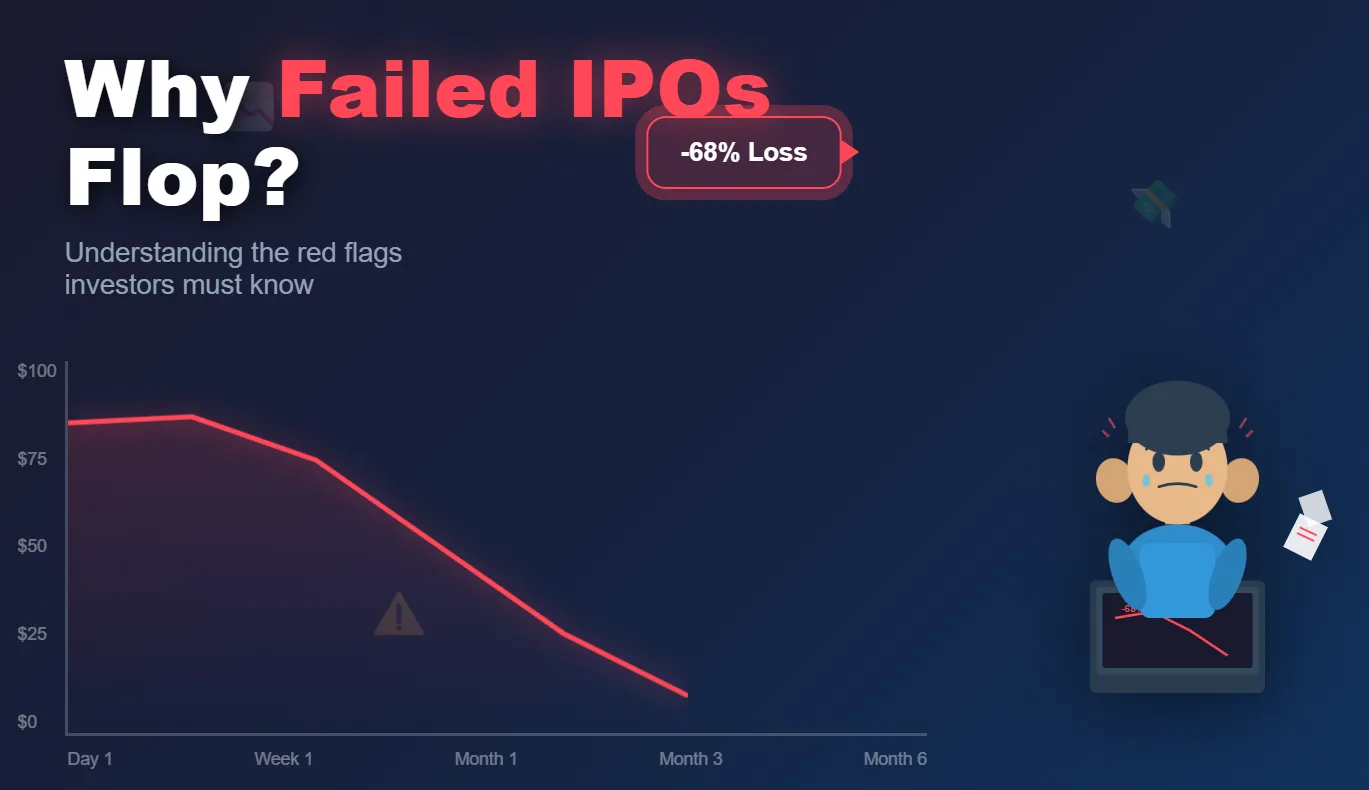
An IPO is like a company’s “big day” — a grand entry into the stock market. Excitement, media buzz, big valuations, heavy marketing… everything feels perfect.
But not every IPO becomes a blockbuster.
Some fail, flop, or fall on listing day and keep disappointing for years.
Why does this happen?
Is it bad luck, bad timing, overpricing, or unrealistic hype?
In this article, we break down why IPOs fail, what investors must learn, and how the latest Physics Wallah IPO example fits into this pattern.
Let’s dive into the world of lessons hidden behind failures.
Why IPOs Fail: Key Reasons Explained
1. Overpricing: When the Company Expects Too Much
Many IPOs flop because the issue price is too high compared to the company’s real financial strength.
Companies try to cash in on popularity or short-term hype, but investors reject overpriced shares.
Example:
Paytm IPO (2021) – One of India’s biggest flops.
Price: ₹2,150 (too expensive)
Listed at a -27% loss, continued falling for months.
Lesson:
Price matters more than popularity. Even big brands can fail if valuations are unrealistic.
2. Weak Financials & Low Profitability
If revenue growth is slow, profit is weak, or losses are mounting, smart investors stay away.
Example:
Zomato (2021) – Huge listing but declined later because the company was burning cash and not profitable.
Lesson:
“Brand ≠ Profit.”
Always check financials, not just marketing.
3. Wrong Timing: Bad Market Sentiment
Even good companies flop if markets are falling due to:
- Global uncertainties
- Crude oil spikes
- Inflation
- Interest rate hikes
- FII selling
Example:
LIC IPO (2022) – Entered during a volatile market → Weak listing.
Lesson:
Timing makes or breaks an IPO.
4. Corporate Governance Issues
Issues like:
- Too much promoter control
- Legal disputes
- Poor disclosures
- Unclear business model
Such red flags scare investors.
Example:
Yes Bank FPO (not IPO but same concept) suffered due to governance issues.
Lesson:
If trust breaks, investors walk away.
5. Unrealistic Storytelling & Hype
Some companies sell a dream bigger than reality.
Heavy marketing → High expectations → Low performance → IPO flop
Latest Example: Physics Wallah (PW) IPO Concerns
Even though Physics Wallah (PW) became a famous ed-tech brand, its IPO plan recently raised several red flags.
Here’s why:
1. Revenue Growth Slowed
PW, once rapidly growing, saw a slowdown after the COVID online-learning boom faded.
2. Ed-Tech Industry in Trouble
Big players like Byju’s suffered massive losses → Investor confidence dropped across the sector.
When a whole industry is struggling, a new IPO becomes risky.
3. Falling Profit Margins
Increasing competition + rising offline centre expenses = Lower margins.
4. Overvaluation Concerns
Investors felt the company’s valuation expectations were too high compared to the financial performance.
5. Market Sentiment Weak for Ed-Tech
Stock market prefers:
- Profitable companies
- Stable business models
Ed-tech is currently considered risky.
Result?
PW’s IPO did not receive the kind of strong investor enthusiasm expected.
Lesson from Physics Wallah Example
Even a popular brand needs:
- solid financial numbers
- strong profitability
- sensible valuation
Popularity alone cannot guarantee IPO success.
What Investors Should Learn from Failed IPOs
1. Don’t Buy Just Because the Brand Is Famous
A big fan base ≠ big profits.
Be an investor, not a fan.
2. Study the Financials
Check:
- Revenue trend
- Profit margins
- Debt
- Cash flow
3. Compare Valuation with Competitors
If the IPO price looks too high → avoid.
4. Read DRHP Smartly
Focus on:
- Risks
- Industry outlook
- Promoter strength
- Use of funds
5. Look for Long-Term Strength
Avoid IPOs that depend on temporary trends or hype.
Outcome
Failed IPOs are powerful teachers.
They show us that valuation, timing, financials, and governance matter far more than popularity or marketing.
The latest example of Physics Wallah’s IPO proves that even strong brands can struggle if numbers don’t match the hype.
As an investor:
- Stay cautious
- Study deeply
- Avoid emotional decisions
- And remember — a good company is not always a good IPO
A smart investor learns more from failures than success stories.