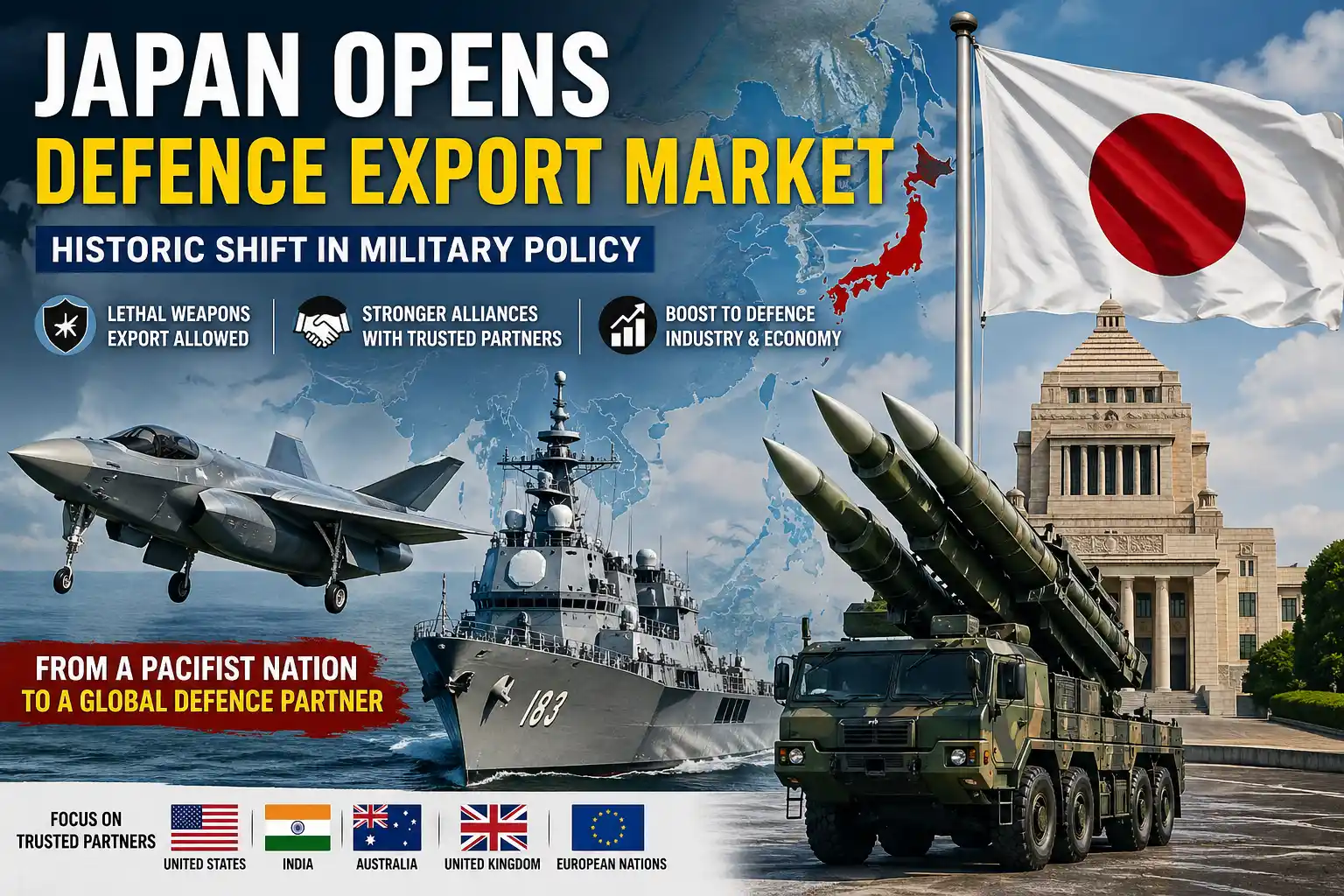
Japan has made a major and historic change in its decades-old defence policy by allowing the export of lethal weapons. With this decision, Japan can now sell advanced defence equipment such as fighter jets, missiles, submarines, and warships to allied countries.
This move is not just a policy update but a major transformation in Japan’s global position—shifting from a peace-only nation to a strategic defence supplier.
Japan’s Old Defence Policy (Background)
After World War II, Japan adopted a pacifist approach under its constitution (Article 9).
- It largely gave up the right to wage war
- Defence was strictly limited to “self-defence”
- Weapons exports were almost completely banned
As a result:
- Japan stayed out of the global defence market
- Its defence companies had limited international growth
New Defence Export Policy – What Has Changed?
1. Full-Scale Defence Exports Allowed
Japan can now export complete weapons systems, not just components:
- Fighter aircraft
- Missile systems
- Naval ships (warships, destroyers)
- Air defence systems
This change can place Japan among global defence exporters
2. Boost to Joint Development Projects
Japan can now export equipment developed jointly with other countries
Example: Next-generation fighter jet project with the UK and Italy
3. Simplified Export Rules
- Earlier rules were highly restrictive and complex
- Now the approval process has been streamlined
However:
- Every deal will still require government approval
- Exports to sensitive or conflict regions will remain restricted
4. Focus on Trusted Allies
Japan will initially export to strategic partner nations such as:
- United States
- India
- Australia
- European countries
This will strengthen geopolitical partnerships
Key Reasons Behind This Decision
1. Rising Military Influence of China
- Increasing tensions in the South China Sea and Taiwan region
- Rapid military modernization by China
Japan aims to strengthen both its security and influence
2. Rising Global Demand for Defence Equipment
- Ongoing conflicts like Ukraine war and Middle East tensions
Demand for defence systems has increased globally
3. Reducing Dependence on the US
- Many countries want alternatives to US defence supplies
- Japan can emerge as a trusted and advanced technology provider
4. Economic and Industrial Growth
Japan’s defence sector has been underutilized due to limited domestic demand
Now:
- Production scale will increase
- Costs may reduce
- Job creation will rise
- Export revenues will grow
Global Impact
Positive Impact
1. Entry into Global Defence Market: Japan will now participate in the trillion-dollar global defence industry
2. Stronger Strategic Alliances: Closer ties with US-led and Indo-Pacific partners
3. Faster Technology Development:Boost in innovation and advanced defence systems
Risks and Concerns
1. Reaction from China
- China has criticized the move as militarization
- Risk of rising regional tensions
2. Domestic Opposition in Japan
- Concerns over losing its pacifist identity
3. Risk of Arms Race
- Defence spending could rise across the region
What It Means for India
This development is highly significant for India
Potential Benefits:
- Diversification of defence imports
- Access to advanced Japanese technology
- Joint production opportunities (boost to Make in India)
- Stronger Indo-Pacific security cooperation
Possible areas:
- Naval systems
- Surveillance technology
- Missile defence collaboration
Business Perspective
This move is not only strategic but also an economic transformation for Japan
1. A New Export Industry: Defence sector can become a new growth engine
2. Benefits for Companies
- Mitsubishi Heavy Industries
- Kawasaki Heavy Industries
These companies may secure global contracts
3. Revenue Growth Potential
- Global defence market size is in trillions
- Japan’s share can gradually expand
4. Supply Chain Expansion
- Strengthening of manufacturing ecosystem
- Indirect benefits to small and medium enterprises
Final Conclusion
Japan opening its defence export market is a game-changing decision.
This step:
- Redefines its foreign policy
- Creates a new economic growth engine
- Positions Japan as a key player in the global defence ecosystem
While geopolitical risks and tensions remain, in the long term, this move can significantly strengthen Japan’s strategic and economic position.
Source: Japan Government (MOFA) and recent policy updates