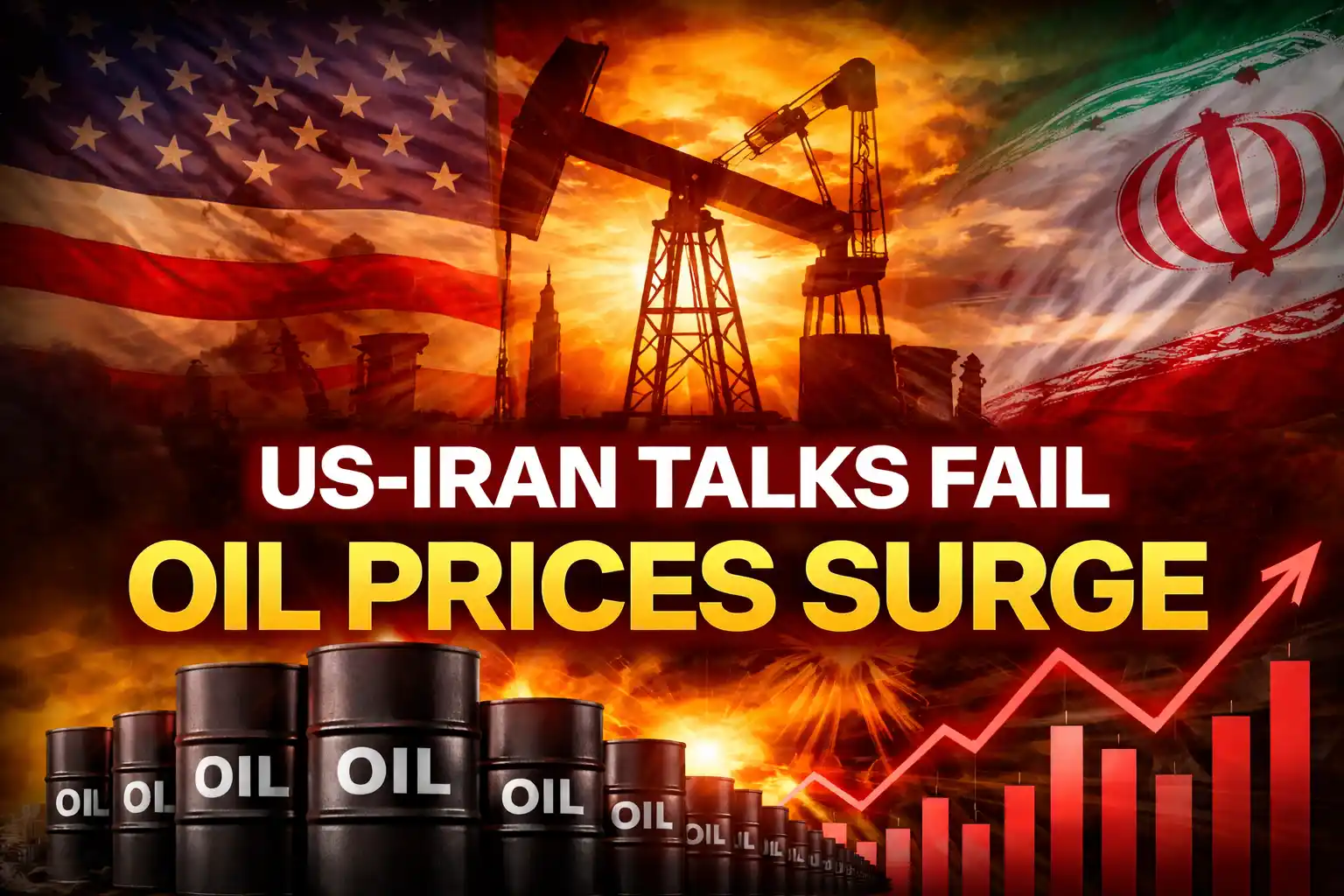
In April 2026, global attention was focused on the US–Iran peace talks held in Pakistan. There was strong hope that a lasting solution could be reached to end the ongoing conflict and reduce tensions. However, when the talks ended without any agreement, it triggered immediate reactions in the global oil market.
Before the talks, oil prices had declined on expectations of peace, but after the failure, prices surged sharply. This entire episode once again proved how deeply geopolitical tensions can influence the global economy and energy markets.
Background of the Talks
- The conflict between the US and Iran began in February 2026
- Key oil routes like the Strait of Hormuz came under threat
- Global oil supply started getting disrupted
- Pakistan mediated a ceasefire between both nations
- These talks were aimed at turning that ceasefire into a permanent peace agreement
These were considered one of the most significant direct negotiations in decades
Why These Talks Were Important
- Could have stabilized global oil supply
- Possibility of ending the war completely
- Could reduce global inflation pressure
- Trade and shipping routes might have normalized
That’s why the entire world was closely watching these discussions
Why Oil Prices Fell Before the Talks
Before the talks began, the market showed a positive sentiment expecting a possible deal.
🔹 Key Reasons:
- Hope for a permanent ceasefire
- Expectation that the Strait of Hormuz would remain open
- Anticipation of normalized oil supply
- Reduction in risk perception among investors
Price Movement (Before Talks)
- Brent Crude: around $102 → fell to $96–98
- WTI Crude: around $98 → fell to $92–94
Overall decline of about 4–6%
Why the Talks Failed
🔹 1. Nuclear Program Dispute
- The US demanded Iran halt its nuclear program
- Iran refused to accept this condition
🔹 2. Control Over Oil Routes
- Iran wanted control over the Strait of Hormuz
- The US insisted on free navigation
🔹 3. Sanctions and Economic Demands
- Iran demanded removal of sanctions
- The US focused on security conditions
🔹 4. Lack of Trust
- Both sides lacked trust in each other
These major differences led to a complete deadlock
Oil Prices Surge After Talks Failed
As soon as the talks failed, uncertainty returned to the market and prices jumped sharply.
Price Movement (After Failure)
- Brent Crude: ~$96 → rose to $104–106
- WTI Crude: ~$92 → rose to $100–102
A sharp increase of 6–8%
Key Reasons Behind the Price Surge
🔹 1. US Naval Blockade
- The US announced a blockade on Iranian ports
- Risk of disrupted oil exports increased
🔹 2. Strait of Hormuz Risk
- This route is critical for global oil supply
- Fear of disruption pushed prices higher
🔹 3. Rising Geopolitical Tensions
- Risk of further escalation in conflict
🔹 4. Market Panic
- Traders added a risk premium to oil prices
Before vs After
| Situation | Brent Price | Market Sentiment |
| Before Talks | $102 → $96 | Positive |
| During Talks | $96–98 | Neutral |
| After Failure | $96 → $105+ | Panic |
Global Impact
🔹 1. Oil & Energy Sector
- Increased supply uncertainty
- Higher fuel prices expected
🔹 2. Inflation Risk
- Rising transportation costs
- Everyday goods may become expensive
🔹 3. Stock Markets
- Increased volatility
- Investors remain cautious
🔹 4. Trade & Shipping
- Higher shipping and insurance costs
Impact on India
- Petrol and diesel prices may rise
- Higher import bill
- Pressure on the rupee
- Increased inflation risk
Deep Analysis
Markets react to expectations, not just reality
- Before talks: “A deal might happen” → prices fell
- After failure: “No deal” → panic → prices surged
This pattern is common and likely to repeat in future geopolitical events
Outcome
The failure of the US–Iran talks in Pakistan turned out to be a major turning point for global oil markets. While prices had declined earlier due to hopes of peace, the breakdown of negotiations created panic and pushed prices sharply higher. This clearly highlights how geopolitical tensions can have far-reaching effects beyond borders, impacting global trade, inflation, and economic stability. If the situation worsens further, oil prices may continue to rise, increasing pressure on the global economy.