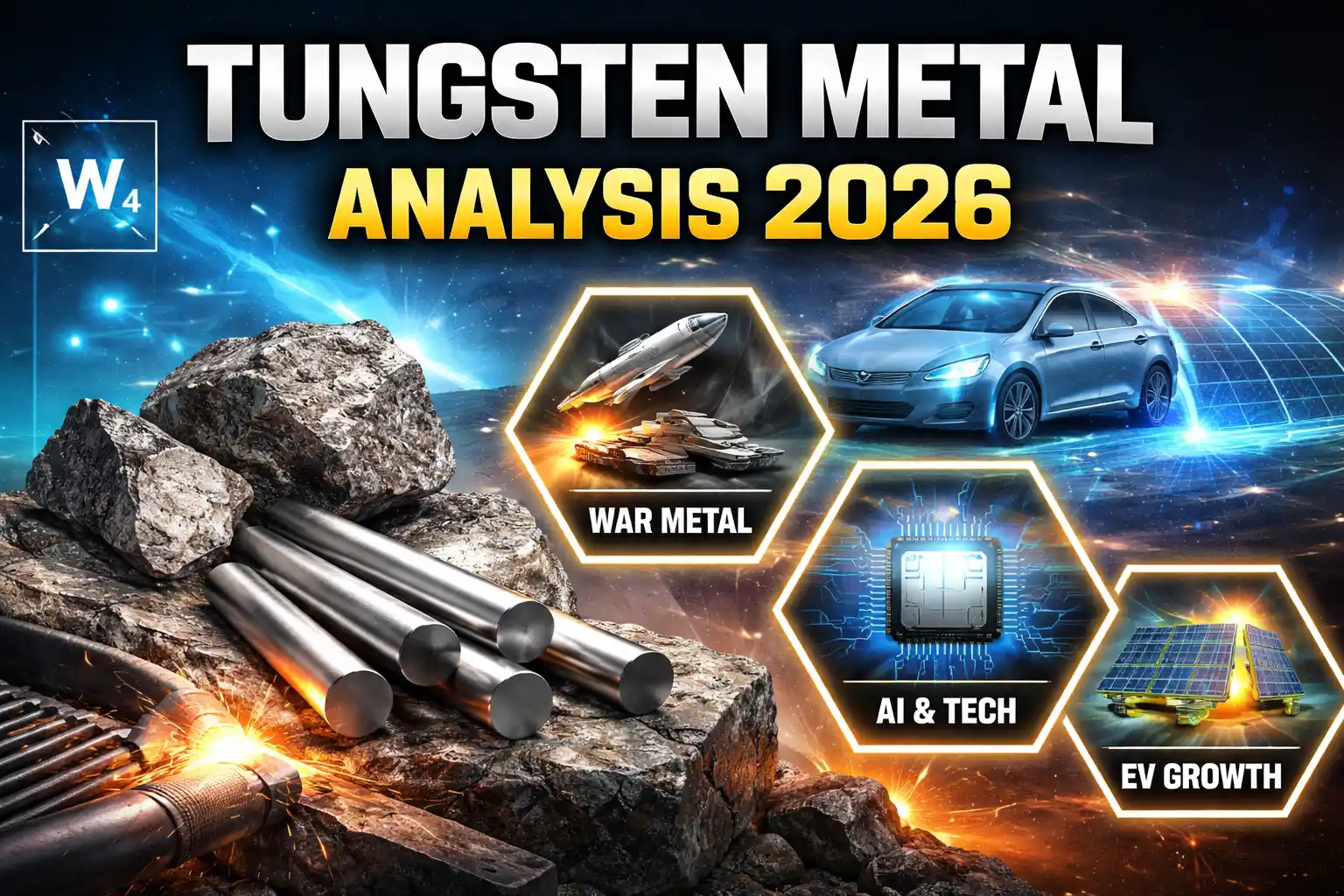
In the modern global economy, the importance of natural resources is rapidly evolving. While oil dominated the 20th century as the world’s most critical resource, the 21st century is increasingly being shaped by rare and strategic metals. Among them, Tungsten has emerged as one of the most important.
In 2026, Tungsten is no longer just an industrial raw material. It has become a strategic asset that directly influences defense capabilities, technological development, and geopolitical power.
What makes Tungsten unique is its connection to almost every major global trend:
- Rising geopolitical tensions and wars
- Rapid growth of artificial intelligence and semiconductors
- Expansion of electric vehicles (EVs) and clean energy
This combination has pushed Tungsten into a new category:
👉 “War Metal + Tech Metal + Strategic Resource”
As demand surges and supply remains constrained, the world is beginning to realize that Tungsten could play a role in the future similar to what oil played in the past.
What is Tungsten and Why is it So Important?
Tungsten is a rare metal known for its exceptional strength and heat resistance. It has the highest melting point of any metal (~3422°C), making it indispensable in environments where extreme temperatures and durability are required.
Key Characteristics:
- Extremely high melting point
- Superior hardness and density
- Excellent resistance to wear and corrosion
- Stability under extreme pressure and heat
In simple terms:
Tungsten performs where most other metals fail
Because of these properties, it is widely used in industries that require reliability under extreme conditions — especially defense, aerospace, and advanced manufacturing.
Major Applications of Tungsten
1. Defense Sector (Primary Demand Driver)
One of the most critical uses of Tungsten is in the defense industry. It is used in:
- Armor-piercing ammunition
- Missile components
- Military-grade protective systems
Its density and hardness make it ideal for high-impact applications.
- During times of conflict, Tungsten demand rises sharply due to increased military production.
2. Technology and Semiconductors
Tungsten plays a crucial role in modern electronics, especially in:
- Semiconductor manufacturing
- Microchips and integrated circuits
- Advanced computing systems
As AI and digital infrastructure expand globally, the demand for Tungsten in electronics is also rising.
3. Electric Vehicles (EVs) and Clean Energy
The transition to clean energy is another major growth driver:
- Electric vehicle components
- Battery technologies
- Renewable energy systems
- As countries invest more in sustainability, Tungsten demand is expected to grow further.
4. Industrial and Manufacturing Use
A large portion of Tungsten demand comes from industrial applications:
- Cutting tools
- Drilling equipment
- Mining machinery
Tungsten carbide, in particular, is widely used due to its extreme hardness and durability.
Latest Market Developments in 2026
The Tungsten market has undergone significant changes in 2026:
- Rising geopolitical tensions have increased defense demand
- Prices have surged by 30–40% within a short period
- Governments and defense companies are actively stockpiling
- Supply shortages are becoming more visible
The key takeaway:
Demand is rising rapidly, but supply is struggling to keep up
Demand Growth: A Strong Upward Trend
Compared to the previous year, Tungsten demand has shown a noticeable increase.
Key Data:
- Global demand growth: ~20–25% increase in 2026
- Market size:
- 2025: ~$7.3 billion
- 2026: ~$7.6 billion
- Physical consumption:
- 2025: ~134–135 kilotons
- 2026: ~140–141 kilotons
- This indicates that both volume and value demand are rising simultaneously, which is a strong bullish signal.
Price Analysis: Entering a Commodity Supercycle
Tungsten prices have seen a dramatic rise in recent years:
- Some segments have experienced 300%–500% price increases
- Ammonium Paratungstate (APT), a key Tungsten compound, has surged significantly
- Prices are expected to remain elevated in the near term
Reasons Behind Price Surge:
- Tight supply conditions
- Increased military demand
- Export restrictions by major producers
- This suggests that Tungsten is entering a commodity supercycle phase, where prices remain elevated for an extended period.
Global Supply Dynamics
China
The most critical factor in the Tungsten market is supply concentration:
- China controls 70–80% of global Tungsten production
- It has imposed export restrictions and quotas
Impact on Global Market:
- Heavy dependence on a single country
- Supply chain vulnerabilities
- Increased geopolitical risk
- As a result, countries like the US and those in Europe are actively seeking alternative sources and investing in domestic mining projects.
Why is a Tungsten Crisis Emerging?
The current situation can be explained by three major factors:
1. Limited Supply
- Mining output is constrained
- Environmental regulations limit expansion
2. Rapid Demand Growth
- Defense sector expansion
- AI and semiconductor boom
- EV and clean energy growth
3. Strategic Stockpiling
- Governments are building reserves
- Companies are securing long-term supply
👉 Combined, these factors are creating a structural supply-demand imbalance
Indian Companies in the Tungsten Ecosystem
India is still an emerging player in the Tungsten market, but several companies are involved:
Hindustan Zinc Limited
- Recently acquired a Tungsten mining block
- Potential to become a key domestic supplier
Wolkem India Limited
- Involved in mineral processing
- Plays a role in the supply chain
Sandvik Asia Limited
- Manufactures Tungsten carbide tools
- Strong industrial presence
Rapicut Carbides Limited
- Produces Tungsten-based tooling products
Insight:
India currently has limited production but significant future growth potential.
Future Outlook (2026–2030)
Growth Prospects
- Steady market growth expected
- CAGR estimated between 4%–8%
Supply Constraints
- Supply shortages may persist
- Gap could widen in coming years
Strategic Importance
- Countries will diversify supply sources
- Recycling and alternative technologies will gain traction
Risks to Watch
- Decline in global conflicts may reduce demand
- Policy changes by China could impact prices
- Development of substitute materials
Outcome
Tungsten has transformed from an industrial metal into a strategic global resource.
It now plays a critical role in:
- Defense systems
- Advanced technology
- Clean energy transition
Key Takeaways:
- Demand is growing rapidly
- Supply remains limited
- Prices are in a strong upward cycle
👉 Final Thought:
“Tungsten is on its way to becoming one of the most strategically important resources of the future — potentially as influential as oil once was.”
(Analysis based on publicly available market data, industry reports, and current global trends.)