

If there is one system that keeps the futures market safe, transparent, and disciplined, it is Mark-to-Market (MTM).
Many beginners think that profit or loss in futures is calculated only on the expiry date. But in reality, in futures trading, profit and loss are calculated and settled daily. This daily settlement process is called Mark-to-Market.
The main purpose of MTM is to:
- Maintain transparency
- Reduce default risk
- Ensure daily settlement
- Keep the derivatives market stable
Without MTM, large losses could accumulate until expiry, creating serious financial risk in the system.
Let’s understand this step by step.
What Is Mark-to-Market (MTM)?
Mark-to-Market means:
At the end of every trading day,
Your open futures position is evaluated
At the current market closing price,
And the profit or loss is calculated and adjusted in your account.
This means:
- You do not wait until expiry for settlement
- Profit or loss is settled daily
MTM ensures that traders pay their losses immediately and receive profits immediately.
Why Is MTM Important in Futures Trading?
Imagine a situation where:
- A trader has a ₹5 lakh loss
- But the loss is not collected until expiry
If that trader cannot pay later, the counterparty may suffer a huge loss.
To prevent this, the exchange:
- Credits daily profits
- Debits daily losses
This reduces the risk of default and keeps the market secure.
How MTM Works (Buy Position Example)
Example: Futures Buy Position
- Futures Buy Price: ₹1,000
- Lot Size: 500
Day 1 Closing Price: ₹1,020
Price increased by ₹20
Profit = ₹20 × 500 = ₹10,000
This ₹10,000 is credited to your trading account.
Day 2 Closing Price: ₹990
Now price falls from ₹1,020 to ₹990
Difference = ₹30
Loss = ₹30 × 500 = ₹15,000
This ₹15,000 is deducted from your margin balance.
Important:
MTM is calculated based on the previous day’s closing price, not the original buy price.
How MTM Works (Sell Position Example)
Example: Futures Sell Position
- Sell Price: ₹2,000
- Lot Size: 250
Day 1 Close: ₹1,950
Price falls by ₹50
Profit = ₹50 × 250 = ₹12,500
Credited to your account.
Day 2 Close: ₹1,980
Price rises by ₹30
Loss = ₹30 × 250 = ₹7,500
Deducted from your account.
MTM applies equally to both long (buy) and short (sell) positions.
Connection Between MTM and Margin
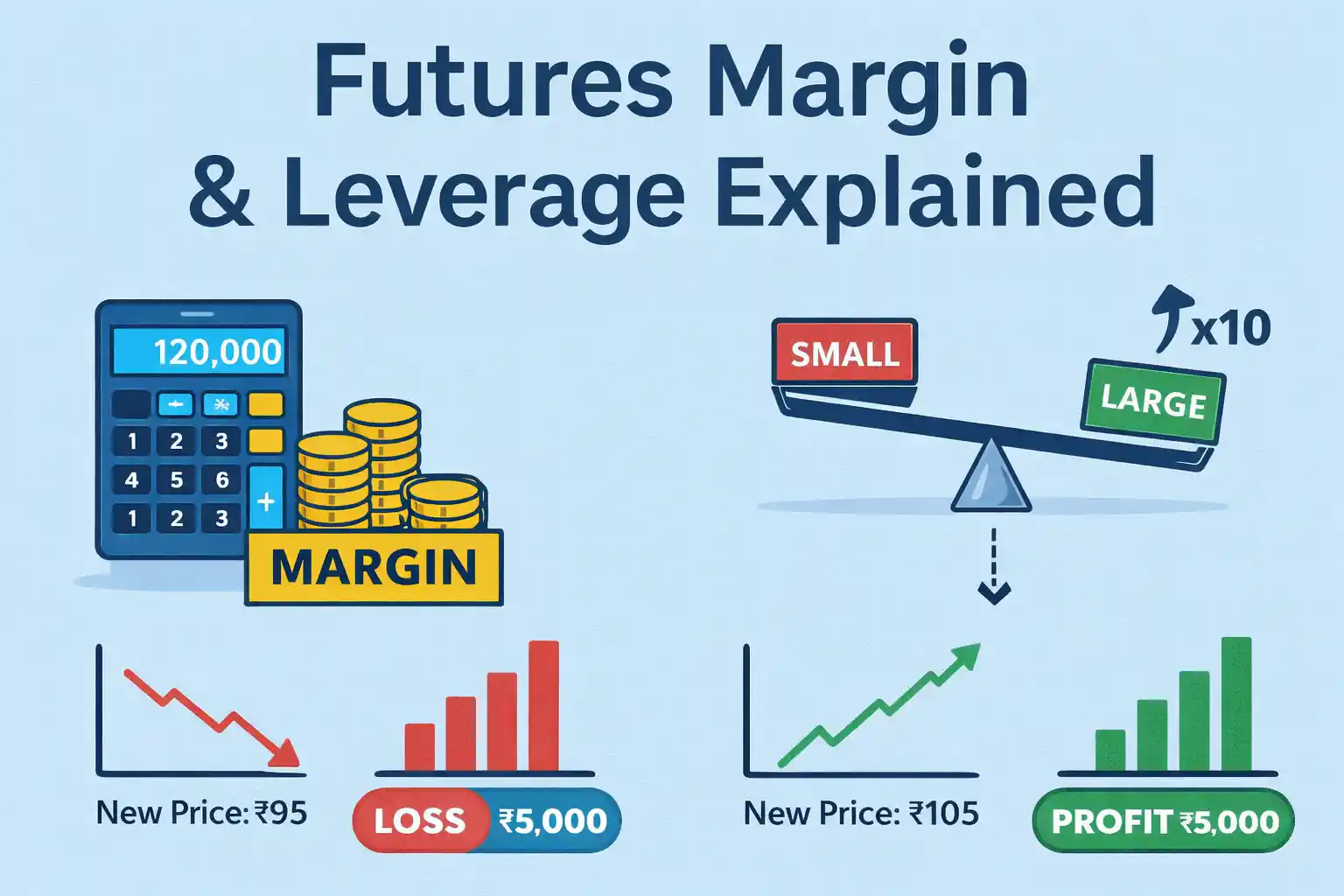
When you enter a futures trade:
- You deposit an initial margin
Every day:
- MTM profit increases your margin balance
- MTM loss reduces your margin balance
If your margin falls below the required level:
- Broker issues a margin call
- You must add more funds
If you fail to add funds:
- The broker may square off your position
This is why understanding MTM is essential for survival in futures trading.
Psychological Impact of MTM
MTM affects traders emotionally because:
- Profit appears daily
- Loss appears daily
Many beginners:
- Panic when they see daily losses
- Close positions emotionally
Professional traders:
- Accept MTM as a normal system
- Focus on overall risk management
- Avoid emotional decisions
Real Benefits of the MTM System
The MTM system provides:
✔ Daily accountability
✔ Reduced counterparty risk
✔ Market stability
✔ Financial discipline
✔ Transparent settlement
This is why futures markets around the world follow the MTM system strictly.
Important Points to Remember
- MTM applies daily in futures trading
- It also applies to option sellers
- Profit is automatically credited
- Loss is automatically deducted
- Margin management is crucial
Ignoring MTM can lead to forced position closure.
Outcome
Mark-to-Market (MTM) is the backbone of futures trading. It ensures that profits and losses are settled daily, keeping the market safe and transparent. However, for traders, it means that risk must be managed every single day. Understanding MTM is not optional—it is essential for anyone who wants to trade futures seriously and responsibly.
































































)
