
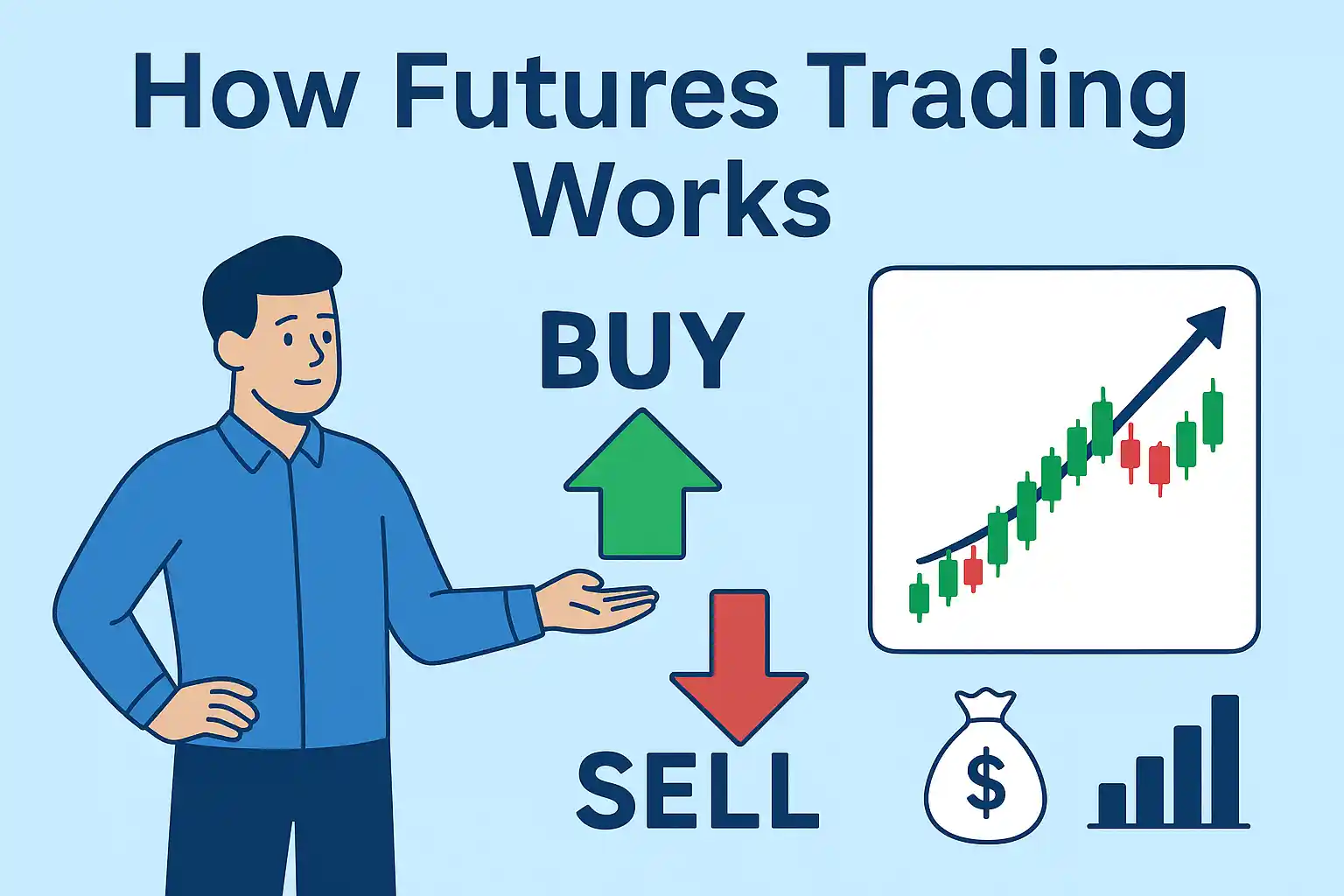
Futures trading is not about long-term investment. It is a method of trading where profit or loss is made purely from price movement. In futures, traders enter into a contract to buy or sell an asset at a fixed price for a future date, without actually owning the asset.
To understand futures trading clearly, we must break it down step by step.
Basic Concept of Futures Trading
A futures contract is a legally binding agreement between two parties where:
- One party agrees to buy
- The other party agrees to sell
- A specific asset (stock or index)
- At a fixed price
- On a fixed expiry date
- For a fixed quantity (lot size)
In futures trading, ownership of shares is not required. You trade only the price movement, not the asset itself.
This is the biggest difference between the cash market and the futures market.
How Buying Futures Works (Long Position)
When a trader believes that the price of a stock or index will increase in the future, they buy a futures contract. This position is called a long position.
By buying futures, the trader benefits if prices rise and faces losses if prices fall.
Example: Futures Buy Explained Step by Step
- Stock: Infosys
- Futures Buy Price: ₹1,500
- Lot Size: 300 shares
- Total Contract Value: ₹4,50,000
- Margin Required: approximately ₹65,000
Here, the trader controls a ₹4.5 lakh contract by paying only ₹65,000 as margin.
If Price Rises
- New Price: ₹1,540
- Profit per share: ₹40
- Total Profit: ₹40 × 300 = ₹12,000
If Price Falls
- New Price: ₹1,460
- Loss per share: ₹40
- Total Loss: ₹12,000
Even a small price movement creates a large profit or loss because of the fixed lot size.
How Selling Futures Works (Short Position)
One unique feature of futures trading is that traders can sell first and buy later. This is called taking a short position.
When a trader expects the price of an asset to fall, they sell a futures contract.
Example: Futures Sell Explained Step by Step
- Instrument: Bank Nifty Futures
- Sell Price: 46,000
- Lot Size: 15
If Price Falls
- Buy back at: 45,700
- Points gained: 300
- Profit: 300 × 15 = ₹4,500
If Price Rises
- Buy back at: 46,300
- Points lost: 300
- Loss: 300 × 15 = ₹4,500
In futures trading, falling markets also provide profit opportunities, which is not possible in traditional investing.
Daily Profit and Loss Settlement (Mark to Market – MTM)
Futures trading uses a system called Mark to Market (MTM), where profits and losses are calculated daily, not only on expiry.
At the end of each trading day:
- Profits are credited to your trading account
- Losses are deducted from your trading account
MTM Example Explained
- Futures Buy Price: ₹2,000
- Day 1 Closing Price: ₹2,050 → ₹50 profit credited
- Day 2 Closing Price: ₹1,980 → ₹70 loss deducted
This daily adjustment protects the market from large defaults.
Margin and Margin Call Explained Clearly
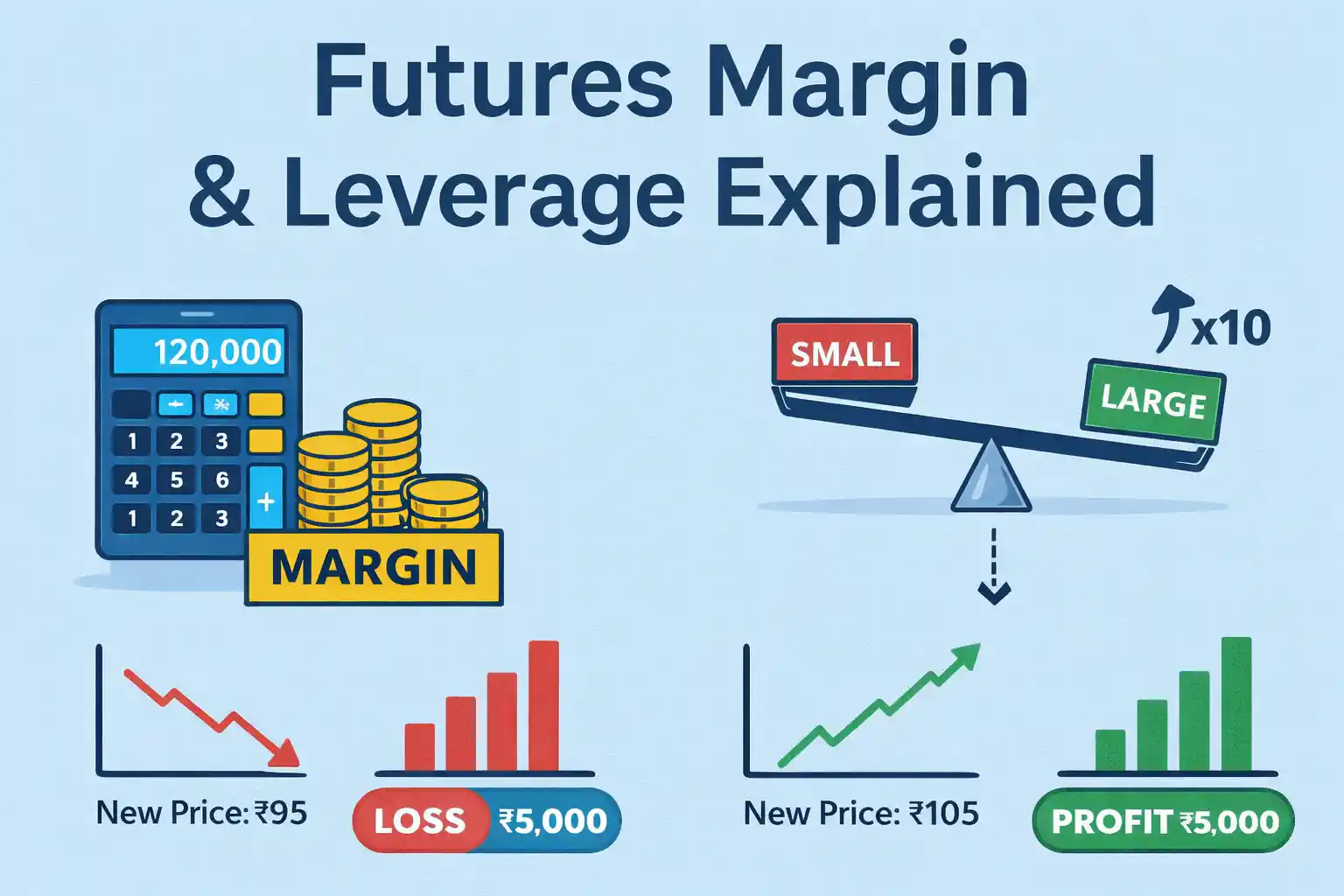
Margin is a security deposit that traders must maintain to keep their futures position open.
If the market moves against your position:
- Losses reduce your margin
- Broker issues a margin call
- You must add more funds
If additional margin is not added:
- Broker may forcefully square off the position
This is why futures trading requires strict discipline.
Understanding the Real Impact of Leverage
Futures trading operates on leverage, which means:
- Small capital controls a large contract
- Profits increase quickly
- Losses also increase rapidly
Example:
- Capital invested: ₹1,00,000
- Exposure controlled: ₹10,00,000
A 2% adverse move can result in a ₹20,000 loss in a single day.
Leverage is a double-edged sword and must be handled carefully.
Expiry, Square-Off, and Rollover
Every futures contract has a fixed expiry date.
Before expiry, traders usually:
- Square off their position to book profit or limit loss
- Roll over the contract to the next month if the trend continues
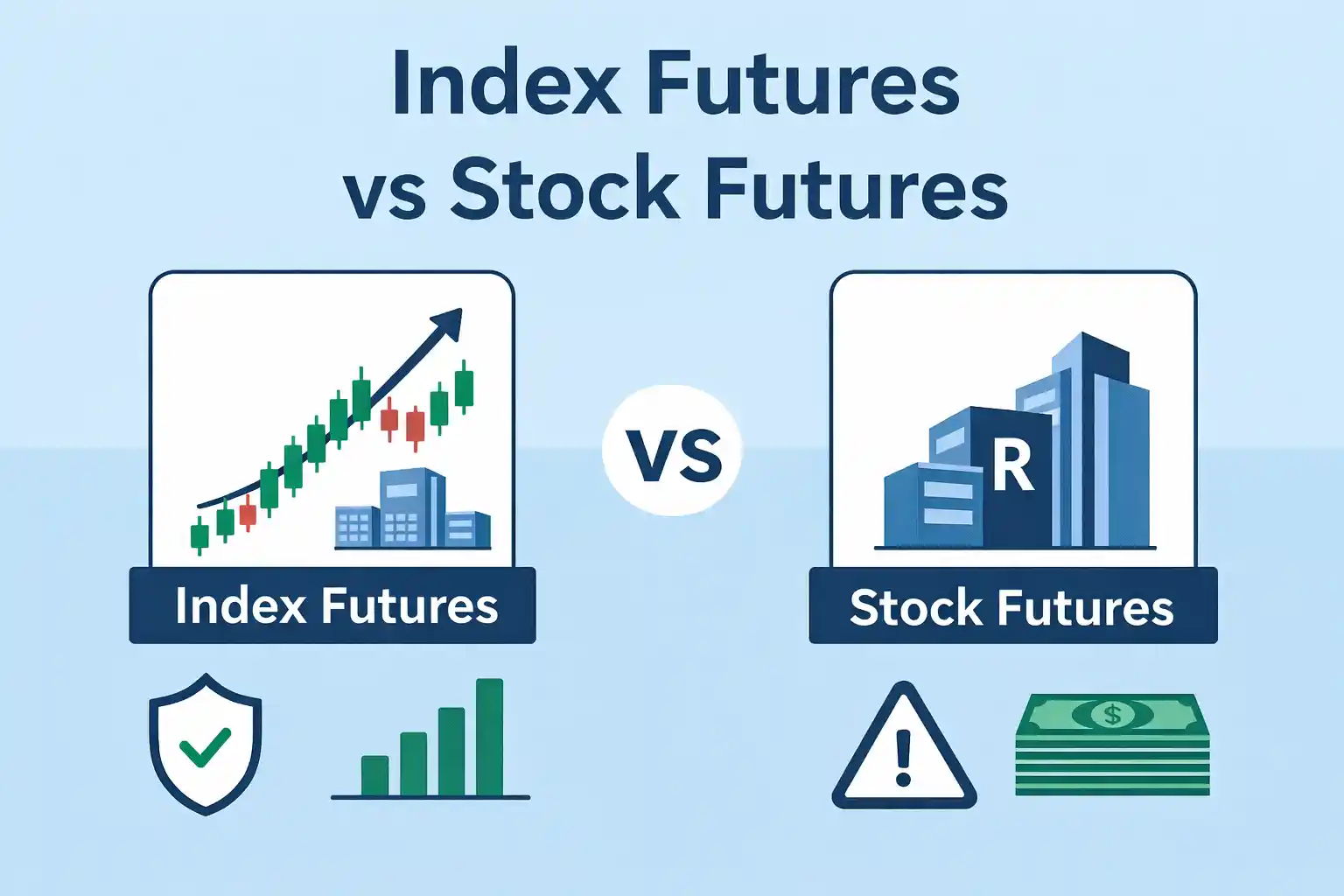
Index futures are cash-settled, while stock futures follow exchange settlement rules.
Who Should Trade in Futures?
Futures trading is suitable for:
- Experienced traders
- Traders with risk management skills
- Those who understand margin and MTM settlement
It is not suitable for:
- Beginners
- Emotional traders
- Long-term investors
Outcome
Futures trading allows traders to profit from both rising and falling markets using leverage and margin. While it offers high return potential, it also carries high risk due to daily settlement and margin requirements. Understanding how buy and sell positions work, along with proper risk management, is essential before entering futures trading. For beginners, learning the basics and trading with discipline is far more important than chasing quick profits.
































































)
