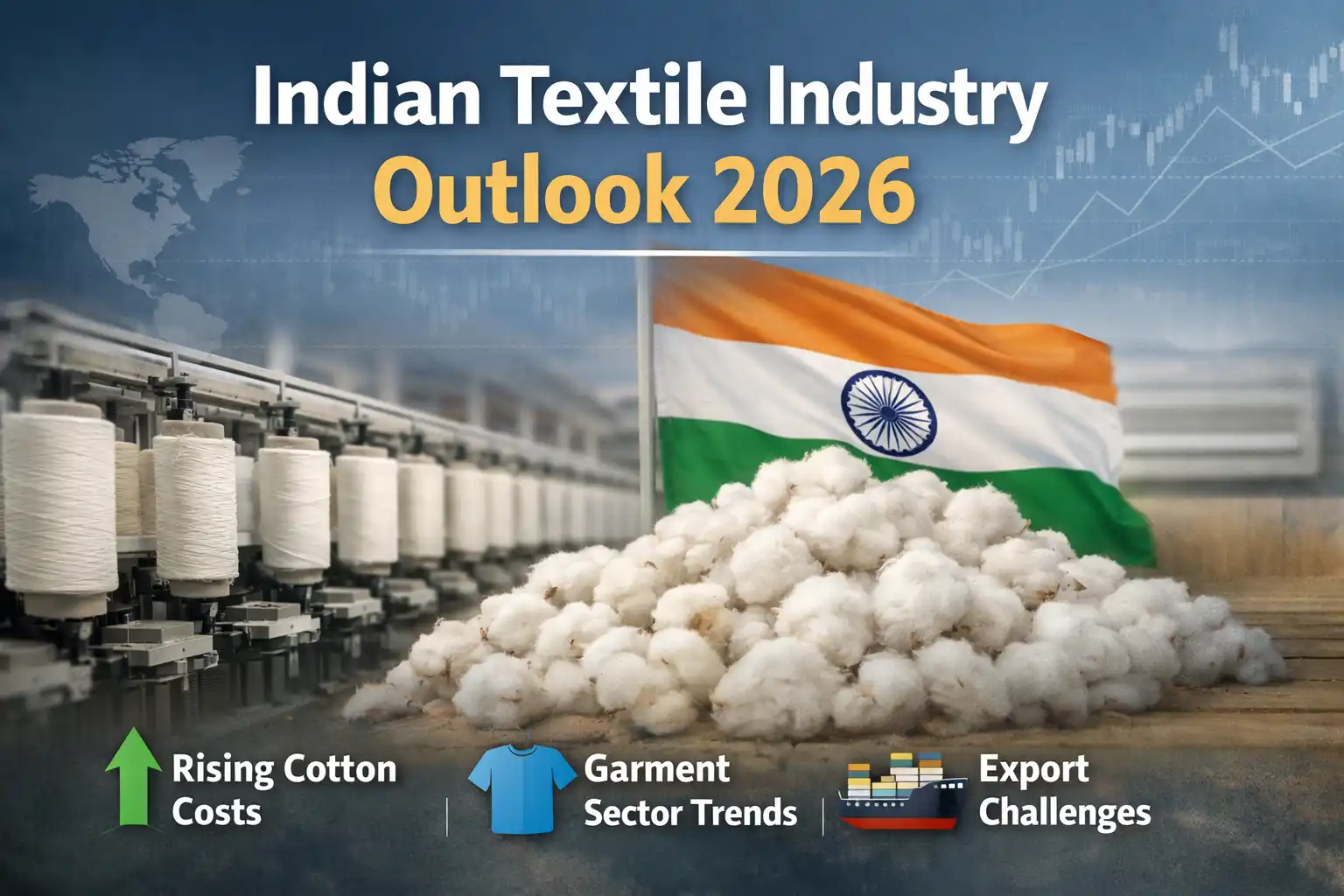
The Indian textile industry is one of the largest sectors of the economy, providing employment to millions and contributing significantly to export earnings. After a challenging 2025 and the introduction of new policies in 2026, the industry is entering a phase of transition.
At the start of 2026, several key developments are impacting the sector — including the reintroduction of 11% import duty on cotton, government support for domestic production, textile parks, and the PLI scheme. These changes affect farmers, spinning and weaving mills, garment manufacturers, and exporters differently.
Let’s break it down in simple language
Raw Material and Cotton Supply
Cotton is the backbone of the textile industry, and 2026 will see its prices and availability play a crucial role.
- End of Duty-Free Period: Until December 31, 2025, cotton imports were exempt from the 11% customs duty to ease supply for mills.
- Duty Reinstated: From January 1, 2026, the 11% import duty has been reimposed, making imported cotton more expensive.
- Benefit for Farmers: Domestic cotton prices will remain supported, giving farmers better earnings under MSP and market rates.
Impact:
- Positive for farmers
- Higher costs for mills and exporters
Spinning and Weaving Mills Outlook
Spinning (yarn manufacturing) and weaving (fabric production) mills face significant challenges in 2026:
- Raw Material Costs: More expensive imports will raise production costs.
- Operational Pressure: Electricity, labor, and financing costs remain high.
- Domestic Demand: Stable, but profit margins may be squeezed.
Summary: Mills may face margin pressures during the first half of 2026.
Garment and Ready-Made Apparel Sector
The ready-made garment sector is relatively better positioned:
- Domestic Consumption Strong: Demand for branded apparel and e-commerce purchases is growing.
- Trends: Fast fashion, value segments, and online branding present opportunities.
- Export Pressure: While exports remain under pressure, domestic demand provides stability.
Conclusion: Garment sector is expected to be stable with some growth potential in 2026.
Exports Outlook
Indian textile exporters face challenges in 2026:
- Slow demand in the U.S. and Europe
- Higher tariffs in some countries
- Competition from cheaper producers like Bangladesh and Vietnam
Opportunities:
- Partial shift of demand from China to India
- Focus on quality and value-added products can create growth
Summary: Exports are likely to remain limited but stable.
Government Policies and Support
The Indian government is actively supporting the textile industry in 2026:
- PLI Scheme: Encourages investments in textile manufacturing
- MSP and CCI Cotton Procurement: Provides income support for farmers
- Textile Parks (PM MITRA): Boosts production and employment
Government Objectives:
- Strengthen domestic production
- Protect farmer incomes
- Reduce excessive dependency on imports
Stock Market Perspective
- Spinning Companies: Margins under pressure; selective investment advised
- Garment and Brand-Focused Companies: Better performance potential
- Export-Dependent Companies: Volatility expected
Investor Strategy: A cautious and selective approach is recommended in 2026.
Overall Outlook for 2026
Positives:
- Support for farmers and domestic production
- Steady domestic demand for garments and apparel
Challenges:
- Higher raw material costs
- Pressure on spinning and weaving margins
- Slow recovery in global exports
Outcome
2026 is expected to be a year of stable yet challenging growth for the Indian textile industry.
While farmers and domestic sectors benefit, mills and exporters must navigate rising costs and global pressures carefully.
Source: Press Information Bureau (PIB), Government of India – Official Notification on Cotton Import Duty.