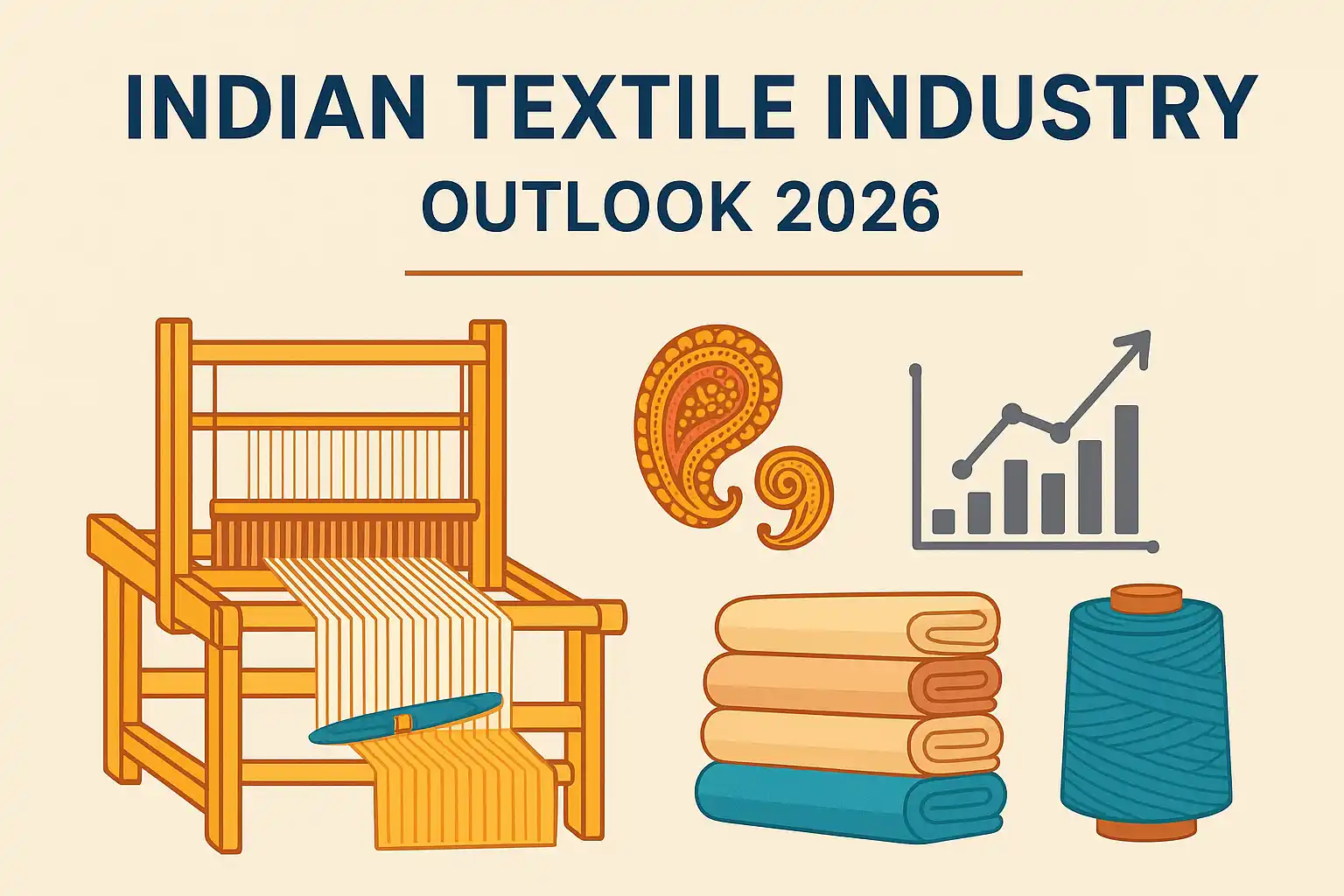
The Indian textile industry is a major and vital pillar of the country’s economy. It not only contributes around 4% to global textile exports, but also provides employment to millions of people across the country. At the beginning of 2026, the sector is witnessing several policy changes, trade agreements, and structural improvements, making it important to understand the future trend of the industry.
In this article, we analyze the sector based on the latest developments and data so you can understand how the Indian textile sector may perform in 2026. Let’s explore the details in simple language.
Current Strength of the Sector – Where Do We Stand?
Export Diversification and Market Expansion
Between April and September 2025, India’s textile exports grew by more than 10% in 111 countries, and in 38 countries the growth exceeded 50%.
This shows that India has expanded beyond dependence on a few export markets and diversified its global reach.
👉 Meaning: If demand slows in one country, exports to other markets can balance the impact.
Challenges and Risks – Pressure on Exports
🇺🇸 Impact of US Tariffs
In 2025, the United States imposed tariffs of up to 50% on Indian textile exports, which created pressure on exporters and reduced profitability in certain segments.
However, recently:
👉 Under the India–US trade discussions, tariffs have reportedly been reduced to around 18%, which could improve India’s competitiveness again.
Still, competition remains tough, as countries like Bangladesh enjoy zero-tariff advantages in certain categories, giving them an edge in the US market.
👉 Summary: Tariff uncertainty remains, but new trade negotiations are creating opportunities for recovery.
Domestic Demand – The Biggest Support for the Sector
Domestic consumption continues to provide strong support to the industry.
- India’s textile industry size is estimated at over USD 180 billion, with a large share coming from domestic demand.
- Online shopping and branded clothing demand are rapidly expanding into Tier-2 and Tier-3 cities.
👉 Meaning: Even if exports fluctuate, domestic consumption helps keep the sector stable.
Impact of Raw Materials – Cotton and Production Costs
What Do Raw Material Trends Indicate?
Declining cotton production and rising cotton prices have become concerns for manufacturers.
As a result, industry participants have demanded removal or reduction of import duties on cotton to stabilize supply and pricing.
👉 Meaning: Higher raw material costs can pressure company margins, while stable or falling prices can improve profitability.
Policy Support – FTAs and Export Strategy
🇪🇺 India–EU Free Trade Agreement (FTA)
The India–EU trade deal is expected to provide zero or lower tariff access to a $95 billion European textile market, giving Indian exporters a competitive advantage.
This could help India compete better against Bangladesh, Pakistan, and other textile exporters.
Expansion into New Markets
The government has also identified 40 countries for focused export promotion, targeting a combined potential market of around $590 billion.
👉 Meaning: India is actively diversifying export destinations to reduce dependency on limited markets.
Sector Strength and Future Growth Drivers
The textile sector in 2026 is being supported by two major pillars:
✔ Export Growth
- Exports rising across 111+ countries
- Benefits from new trade agreements
- Relief from tariff negotiations
✔ Domestic Demand Growth
- Rising clothing consumption
- Growth of e-commerce and organized retail
✔ Long-Term Target
The government aims to increase textile exports to $100 billion by 2030, signaling long-term sector growth ambitions.
👉 This indicates a positive long-term growth direction.
Textile Sector Trend for 2026
Positive Signals
✔ Exports growing across multiple countries
✔ Strong domestic consumption
✔ Supportive trade negotiations and policies
Risks and Challenges
- Tariff-related uncertainties remain
- Raw material prices may fluctuate
Overall Outlook
The Indian textile sector is moving toward positive growth in 2026, especially if:
- Tariff relief continues,
- Global market diversification succeeds,
- Raw material costs remain under control.
With the right policies, export expansion, and stable cost structures, the sector has strong potential to strengthen further in 2026 and beyond.