हिंदी में पढ़ने के लिए मेनू बार से हिंदी भाषा चयन करें।
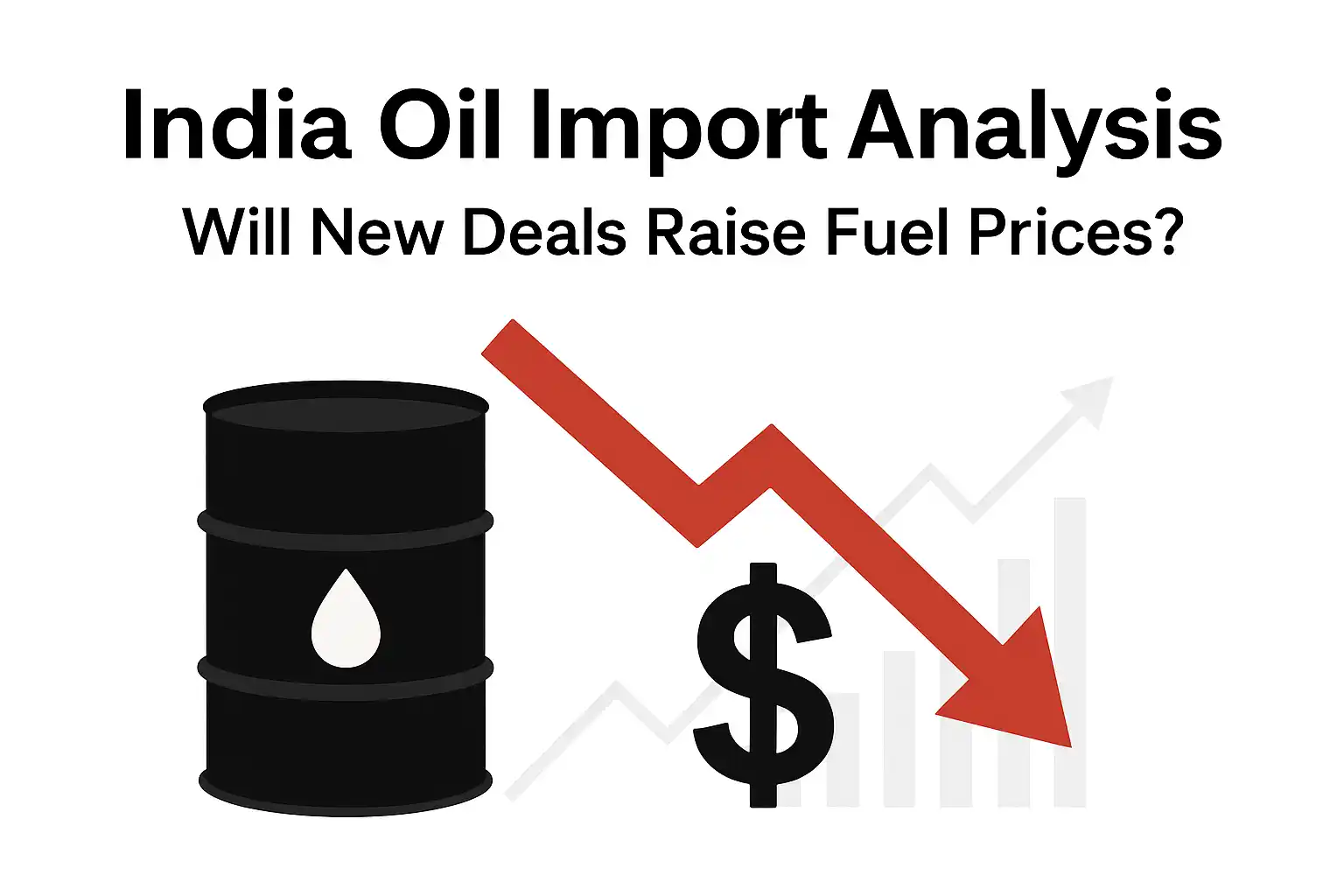
India is one of the largest oil-consuming countries in the world. Nearly 85% of the crude oil India uses is imported. Because of this, decisions about where India buys oil are not just commercial choices—they have major economic and geopolitical implications.
After the Russia–Ukraine conflict began, Russia started selling oil at heavy discounts. India took advantage of this opportunity and increased oil imports from Russia, helping reduce its overall oil import costs.
However, the situation is now evolving. Following recent trade discussions between India and the United States, new conditions related to oil purchases have emerged. At the same time, India is also exploring oil imports from countries like Venezuela.
This raises several key questions:
- If Russia’s oil was cheaper, what happens now?
- Will oil from the US or other countries cost more?
- Can Venezuela become a cheaper alternative?
- How will these shifts affect petrol prices and India’s economy?
Let’s understand the entire situation in simple language.
Why Does India Need So Much Oil?
India’s economy is growing rapidly. More vehicles are on the road, industries are expanding, air travel is increasing, and energy demand continues to rise.
India:
- Is the third-largest oil consumer globally.
- Uses more than 5 million barrels of oil per day.
- Imports about 85% of its requirement.
Because of this dependence, even small changes in global oil prices impact:
- Inflation
- Trade deficit
- Rupee value
- Household fuel expenses
Why Did Russian Oil Become So Important for India?
After sanctions were imposed on Russia, it needed new buyers for its oil. Countries like India and China began purchasing Russian crude at discounted prices.
How Was Russian Oil Cheaper?
If Brent crude was trading at around $68–70 per barrel, Russian Urals crude was often available at:
$10–12 per barrel cheaper.
Example:
- Brent price: $70 per barrel
- Russian crude: $58–60 per barrel
This difference becomes massive when importing millions of barrels daily.
Benefits for India
- Reduced oil import bill
- Lower raw material cost for refiners
- Helped stabilize fuel prices
- Saved foreign exchange reserves
India reportedly saved billions of dollars through discounted Russian oil purchases.
Why Is the Situation Changing Now?
Recent trade negotiations between India and the US include strategic energy considerations.
Why Is the US Concerned?
The US wants to reduce Russia’s oil revenue and encourages partner countries to cut purchases from Russia.
India faces pressure to diversify its oil imports.
Trade Angle
If India reduces Russian oil imports:
- The US may offer trade benefits or lower tariffs.
- Indian exports to the US could benefit.
But India would then need to buy oil elsewhere.
Will Oil Become Costlier If India Buys Less from Russia?
In general, yes, it could become slightly costlier.
Russia was offering deep discounts. Other suppliers typically sell oil closer to global benchmark prices.
India would then depend more on:
- The US
- Middle Eastern countries
- African suppliers
- Venezuela
Most of these sources price oil close to Brent rates.
What Happens If India Imports More Oil from the US?
US crude, known as WTI, often trades close to Brent or slightly cheaper. However, shipping oil from the US to India involves:
- Longer transport routes
- Higher freight costs
- Insurance expenses
- Refinery adjustments
So in practice, US oil can sometimes be more expensive than discounted Russian supplies.
Can Venezuela Become a Cheaper Alternative?
Venezuela has some of the world’s largest oil reserves but faced production declines due to political and economic problems. Now production is gradually recovering.
Indian companies have recently restarted oil imports from Venezuela.
Why Can Venezuelan Oil Be Cheaper?
Because Venezuela needs buyers and often offers discounts compared to Brent prices.
Current Estimated Pricing
If Brent crude is around $68–70:
- Venezuelan crude may be available at $6–8 discount.
Example:
- Brent: $70
- Venezuela: $62–64
This is not as cheap as Russian oil but still cheaper than many other sources.
Price Comparison: Russia vs Venezuela vs Others
| Oil Source | Discount vs Brent | Impact for India |
| Russia | $10–12 cheaper | Cheapest option |
| Venezuela | $6–8 cheaper | Moderately cheaper |
| US | Near Brent price | Costlier or similar |
| Middle East | Near Brent price | Standard pricing |
Russia remains cheapest, Venezuela offers middle-ground savings, while others trade near global prices.
Impact on India’s Oil Import Bill
If India reduces purchases of discounted oil and shifts toward higher-priced sources:
- Oil import bill may increase.
- Dollar demand rises.
- Rupee could face pressure.
However, importing from Venezuela and other discounted sources can partly offset higher costs.
Smart diversification could still help India save billions.
Impact on Petrol and Diesel Prices in India
Many people assume crude oil price changes immediately impact fuel prices. But in India:
- Taxes form a large portion of fuel prices.
- Governments sometimes stabilize prices.
- Oil companies adjust margins.
Therefore:
- Crude price drops do not always quickly reduce fuel prices.
- Price increases are also sometimes delayed.
However, long-term price trends eventually influence consumer fuel prices.
What Strategy Is Best for India’s Energy Security?
Buying only cheap oil is not enough. India aims to ensure stable supply.
The goal is diversification:
- Avoid dependence on one country.
- Maintain supply from multiple regions.
- Reduce risk of disruptions.
A mix of imports from Russia, the Middle East, the US, Venezuela, and Africa reduces supply risks.
What Might India Do Going Forward?
Possible strategy:
- Not completely stop Russian imports.
- Increase imports from Venezuela and Africa.
- Maintain purchases from Middle Eastern suppliers.
- Import some volumes from the US.
India will likely maintain balance rather than depend on one source.
What Could Happen to Oil Prices Ahead?
Oil prices depend on several factors:
- Global conflicts
- OPEC production decisions
- Economic growth or slowdown
- Demand changes
- Currency movements
Prices can move in either direction in coming months.
What Is India’s Real Challenge?
In simple terms:
- Russian oil has been the cheapest.
- US pressure may reduce Russian purchases.
- Oil from other sources may be costlier.
- Venezuela offers a mid-level alternative.
- India will try to balance costs and supply security.
- Fuel price impacts will appear gradually.
- The goal is not just cheap oil, but reliable supply.
Conclusion
India is entering a crucial phase in its oil strategy. Earlier, discounted Russian oil helped reduce import costs, but changing global relations mean India must now diversify its oil sources.
The focus is no longer just on cheap oil, but on ensuring stable and secure supply from multiple countries. While costs may fluctuate, smart sourcing can help India manage its import bill and protect economic stability.
How effectively India balances price, supply security, and global partnerships will determine the long-term impact on fuel prices and the economy.
The coming months will show how successfully India manages this balance.
(Analysis based on currently available global market data and industry reports.)