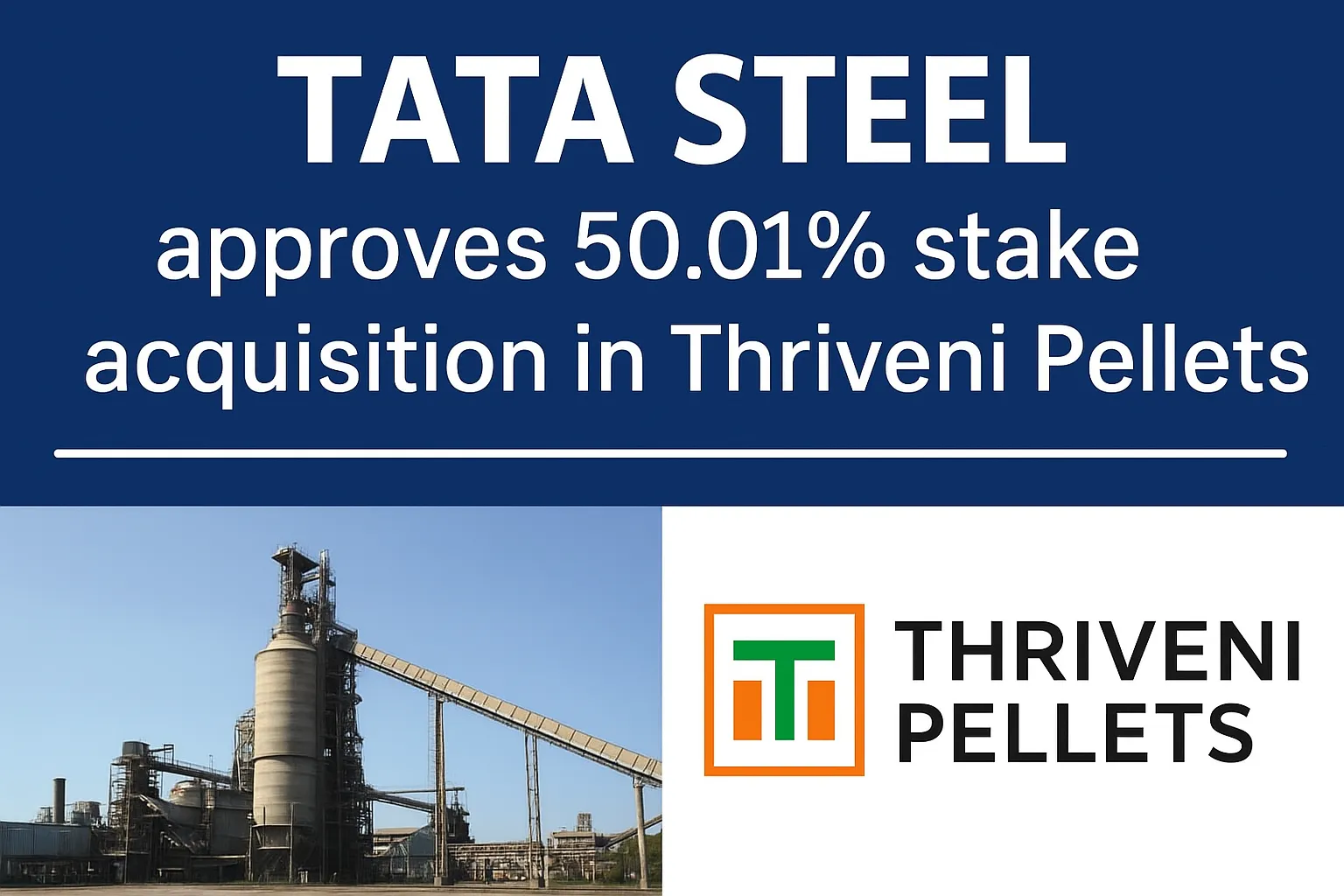
Tata Steel announced on Thursday that its board has approved the acquisition of a 50.01% equity stake in Thriveni Pellets Private Limited (TPPL). The deal, valued at up to ₹636 crore, has been signed through definitive agreements and is subject to internal and regulatory approvals. The company described the acquisition as a “strategic, long-term value enhancer.”
TPPL owns a 4 MTPA pellet plant and a 212 km slurry pipeline located in Jajpur, Odisha—considered a critical asset for iron ore logistics in the region. With this acquisition, Tata Steel aims to further strengthen its raw material security and operational efficiencies.
Why is Tata Steel acquiring TPPL?
According to the company, gaining majority control in TPPL will help Tata Steel significantly improve its raw material security, cost optimisation, and supply-chain stability.
Pellets are a key input in steel production. A stable and partially controlled pellet source allows Tata Steel to reduce dependency on external suppliers, manage costs more efficiently, and stabilise long-term production planning.
The 212-km slurry pipeline will also reduce logistics expenses and support smoother iron ore movement across the region.
TPPL’s Production Capacity
Thriveni Pellets Private Ltd operates:
- A 4 million tonnes per annum (4 MTPA) pellet plant,
- A 212-km iron ore slurry pipeline,
- And associated iron ore handling infrastructure.
The asset is considered strategically important within India’s pellet manufacturing ecosystem and is expected to integrate well into Tata Steel’s existing operations.
Deal Conditions & Next Steps
Tata Steel clarified that the transaction will move ahead only after
- due diligence,
- internal approvals,
- and regulatory clearances
are completed.
The remaining 49.99% stake in TPPL will continue to be held by the Thriveni group and its associated shareholders.
Until the deal closes, both companies will work on integration planning and operational alignment.
Market Reaction
Following the announcement, investor sentiment turned positive, with analysts describing the move as beneficial for Tata Steel’s long-term margin profile.
Brokerage reports highlighted that the deal strengthens Tata Steel’s raw material linkage, reduces cost volatility, and enhances operational flexibility. The full financial benefits, however, will be visible only after the deal is completed and the integration takes effect.
Impact on Odisha & the Pellet Industry
TPPL’s infrastructure is a key part of Odisha’s mining and manufacturing ecosystem. With Tata Steel joining in, experts expect positive developments in:
- regional industrial activity,
- supply chain efficiency,
- and local employment opportunities.
What’s Next for Tata Steel?
In recent years, Tata Steel has been actively expanding its India operations and reinforcing control over key raw material sources. The TPPL acquisition aligns perfectly with this strategic roadmap.
Industry observers expect the deal to close once regulatory approvals are in place—after which Tata Steel will begin fully leveraging TPPL’s plant capacity and pipeline infrastructure for its steelmaking operations.
Source: Tatasteel newsroom
Join our chatroom Bizchat for professional talks and more!