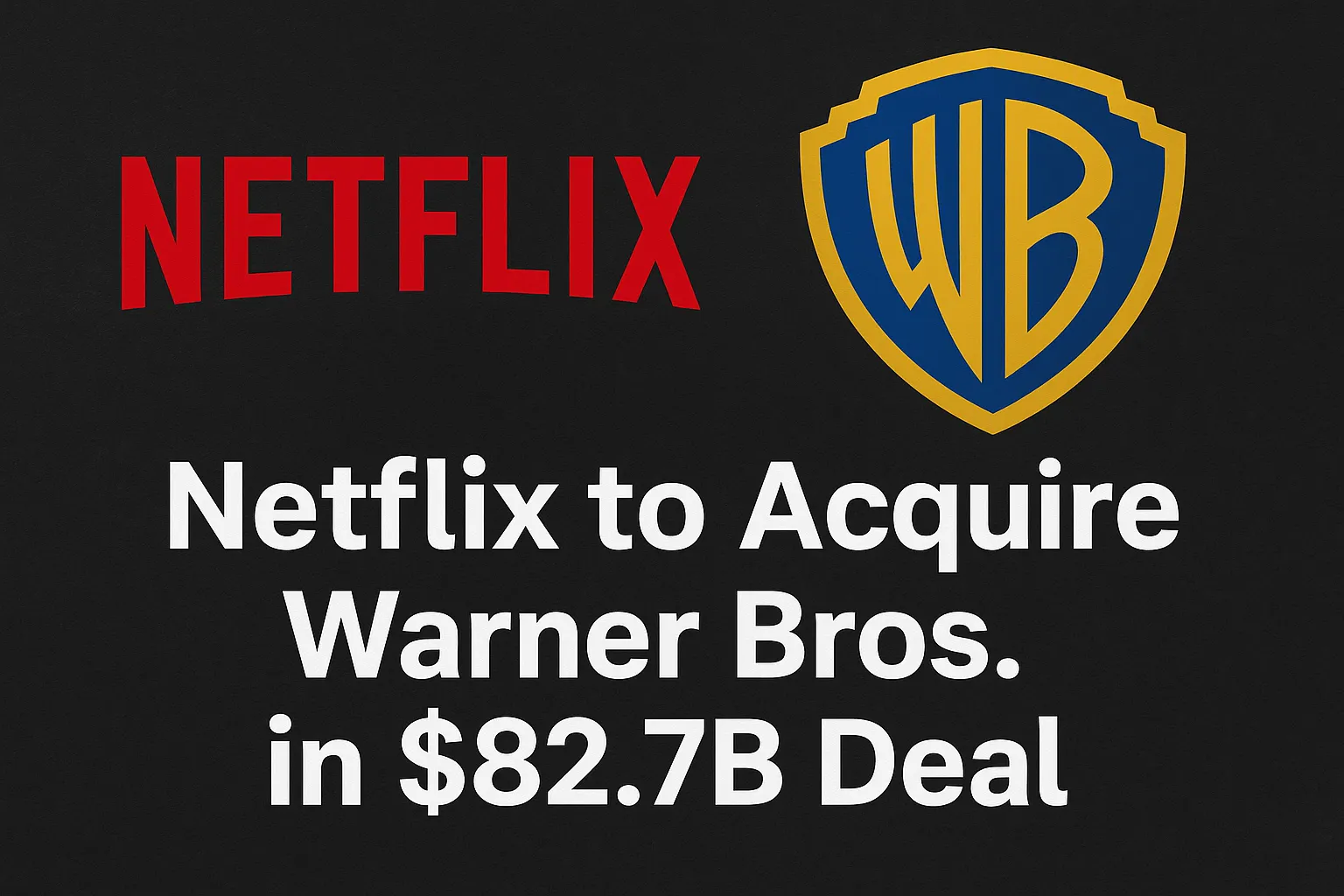
In one of the biggest entertainment mergers of the decade, Netflix has officially announced that it will acquire Warner Bros. following the planned separation of Discovery Global, valuing the historic Hollywood studio at an enterprise value of $82.7 billion and an equity value of $72.0 billion.
The all-cash-plus-stock deal will give Warner Bros. shareholders $23.25 in cash and $4.50 worth of Netflix stock per share, bringing the implied per-share value to $27.75. The acquisition will be completed only after Warner Bros. Discovery (WBD) spins off its global networks division — Discovery Global — into a separate company.
A Landmark Move in Global Entertainment
The transaction signals a turning point in the streaming wars, merging Netflix’s global reach with Warner Bros.’ powerful content library, which includes DC, Harry Potter, Game of Thrones, HBO Originals and decades of iconic films.
Netflix has confirmed that Warner Bros.’ theatrical division — including upcoming DC films, franchise movies, and major cinematic releases — will continue operating with full theatrical windows before moving to streaming.
Industry analysts say the combined content strength, cost optimization and scaled distribution will significantly shift the balance of power in Hollywood.
Why Netflix Is Making This Move
Netflix has been facing intensifying competition from Disney, Amazon, Apple and regional streaming platforms. By adding Warner Bros., Netflix secures:
- A massive content library featuring globally loved franchises
- HBO + HBO Max Originals, known for high-quality prestige shows
- A stronger position in theatrical + streaming integration
- Long-term subscriber growth potential
- Cost synergies over the next few years as overlapping operations are integrated
For Netflix, the acquisition brings instant scale, especially in genres like superhero content, epic fantasy, premium dramas and theatrical cinema — areas where Warner Bros. has historically been dominant.
What WBD Gets From the Deal
Warner Bros. Discovery has been dealing with heavy debt and structural challenges in the streaming market. By separating Discovery Global and selling Warner Bros. to Netflix, the company aims to:
- Reduce its debt burden
- Strengthen cash flows
- Let each business focus independently
- Unlock shareholder value through the cash-plus-stock offer
The Discovery Global spin-off is expected to be completed within 12–18 months, after which regulatory review for the Netflix acquisition will move forward.
Potential Challenges Ahead
Despite the excitement, the deal faces significant obstacles:
1. Regulatory Scrutiny
A combined Netflix–Warner Bros. entity would become one of the most powerful entertainment companies globally, drawing close examination from competition authorities in the US, UK, EU and Asia.
2. Integration Complexity
Merging two massive organizations — one rooted in Hollywood’s century-old studio system and the other in Silicon Valley’s tech-driven culture — will require careful planning.
3. Market Expectations
Investors will closely watch the financial impact, cost synergies, leadership structure and how Netflix manages both theatrical operations and streaming under a single umbrella.
How This Impacts Viewers
For global subscribers, this acquisition could mean:
- Access to HBO Originals, DC movies, classic WB films and major franchises—directly on Netflix
- Increased content variety and cross-franchise collaborations
- Possible bundling options or new subscription tiers
- A richer mix of theatrical and streaming releases
However, some markets might see pricing adjustments once the full integration takes place.
A Deal That Could Reshape the Future
If approved, this acquisition will be one of the biggest restructurings in Hollywood’s history — rewriting the competitive landscape of entertainment. Netflix, which began as a DVD-by-mail service, is now on track to become a combined studio-streaming giant with the largest content ecosystem in the world.
With the Discovery Global spin-off underway and regulatory reviews expected next year, the entertainment industry will be watching closely. A successful integration could redefine how films and series are produced, released and consumed across the globe.
Source: Netflix News