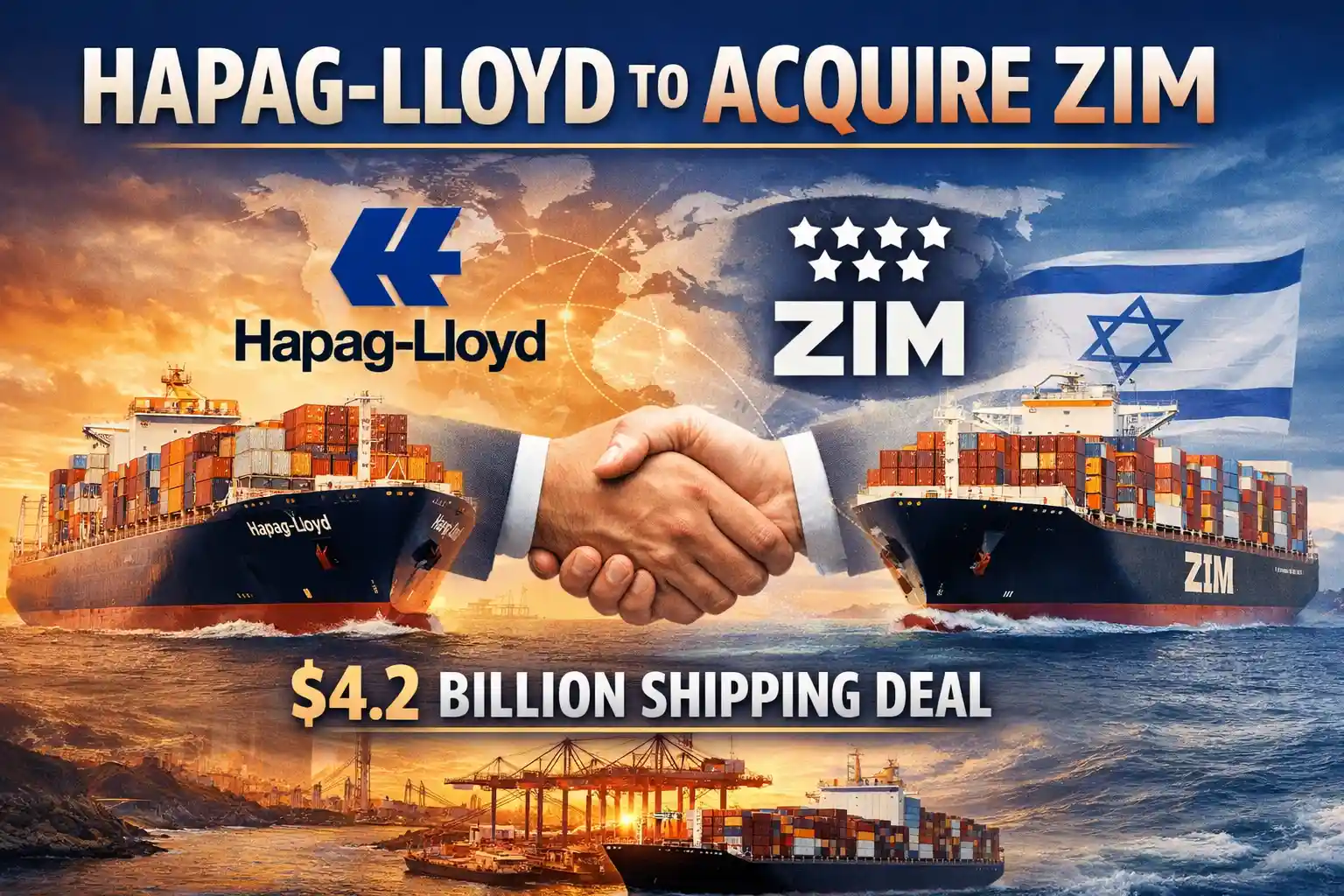
A major development has emerged in the global container shipping industry as German shipping giant Hapag-Lloyd has reached an agreement to acquire Israel-based ZIM Integrated Shipping Services. The deal is being seen as one of the most significant consolidation moves in the shipping sector in recent years.
Industry experts believe this merger could reshape competition, shipping routes, and logistics services across global trade networks.
Latest Update on the Deal
Hapag-Lloyd has agreed to acquire all outstanding shares of ZIM in a deal valued at approximately $4.2 billion. Under the agreement, ZIM shareholders will receive cash payment per share, offering them a premium compared to recent market prices.
The announcement triggered a sharp rise in ZIM’s stock price as investors reacted positively to the premium buyout offer.
However, the acquisition is not yet finalized. The deal still requires approval from shareholders and regulatory authorities across multiple countries. If all approvals are obtained on time, the transaction is expected to close by the end of 2026.
Why This Deal Matters Globally
Container shipping plays a critical role in global trade, moving the majority of goods between countries. The merger of two major shipping operators is therefore significant for international logistics.
After the acquisition:
- The combined company will operate one of the world’s largest container fleets.
- Shipping route coverage will expand significantly.
- The company will gain stronger presence across Asia, Europe, and North America trade corridors.
Experts suggest this consolidation reflects a broader trend where large shipping companies are strengthening their global position through mergers and acquisitions.
Impact on Investors and the Stock Market
Investors responded positively to the announcement because ZIM shareholders are being offered a price higher than the prevailing market value of the stock.
Market participants expect that a larger combined company could:
- Achieve operational cost savings,
- Improve profitability,
- And build stronger global logistics capabilities.
At the same time, analysts caution that shipping remains a cyclical industry influenced by global trade demand, fuel prices, and economic conditions.
Possible Impact on Employees and Operations
Like many large acquisitions, the deal has raised concerns among employees regarding job security and operational restructuring.
Reports indicate that employee unions have expressed concerns about possible workforce adjustments in the future. However, company representatives have stated that the focus remains on strengthening operations and service quality.
Operational restructuring details are likely to become clearer as the deal progresses.
Impact on Customers and Global Trade
For customers and businesses dependent on shipping services, the merger could bring both opportunities and challenges.
Possible advantages include:
- Wider route coverage,
- Better container availability,
- Improved logistics efficiency,
- Stronger service reliability.
However, some industry observers warn that increased consolidation in the industry could eventually reduce competition, which might influence shipping rates in the long term.
Strengths of Both Companies
ZIM is known for its flexible operations and focus on technology-driven shipping services. It has built strong positions in certain niche trade routes and emphasizes digital logistics solutions.
Hapag-Lloyd, on the other hand, already operates a large global shipping network with extensive fleet capacity and strong partnerships worldwide.
Combining both companies could create a more competitive global shipping player.
What Happens Next?
The next key step involves regulatory approvals and shareholder votes. Authorities will evaluate whether the merger could impact competition in global shipping markets.
If approvals proceed smoothly, the acquisition may be completed by late 2026, potentially triggering further consolidation moves within the shipping industry.
Outcome
The acquisition of ZIM by Hapag-Lloyd represents a major consolidation step in the global container shipping sector. Investors see immediate value, while long-term impacts will depend on integration success, global trade trends, and operational efficiency.
The coming months will reveal how this deal shapes the competitive landscape of global shipping and logistics.
Source: hapag news prnewswire