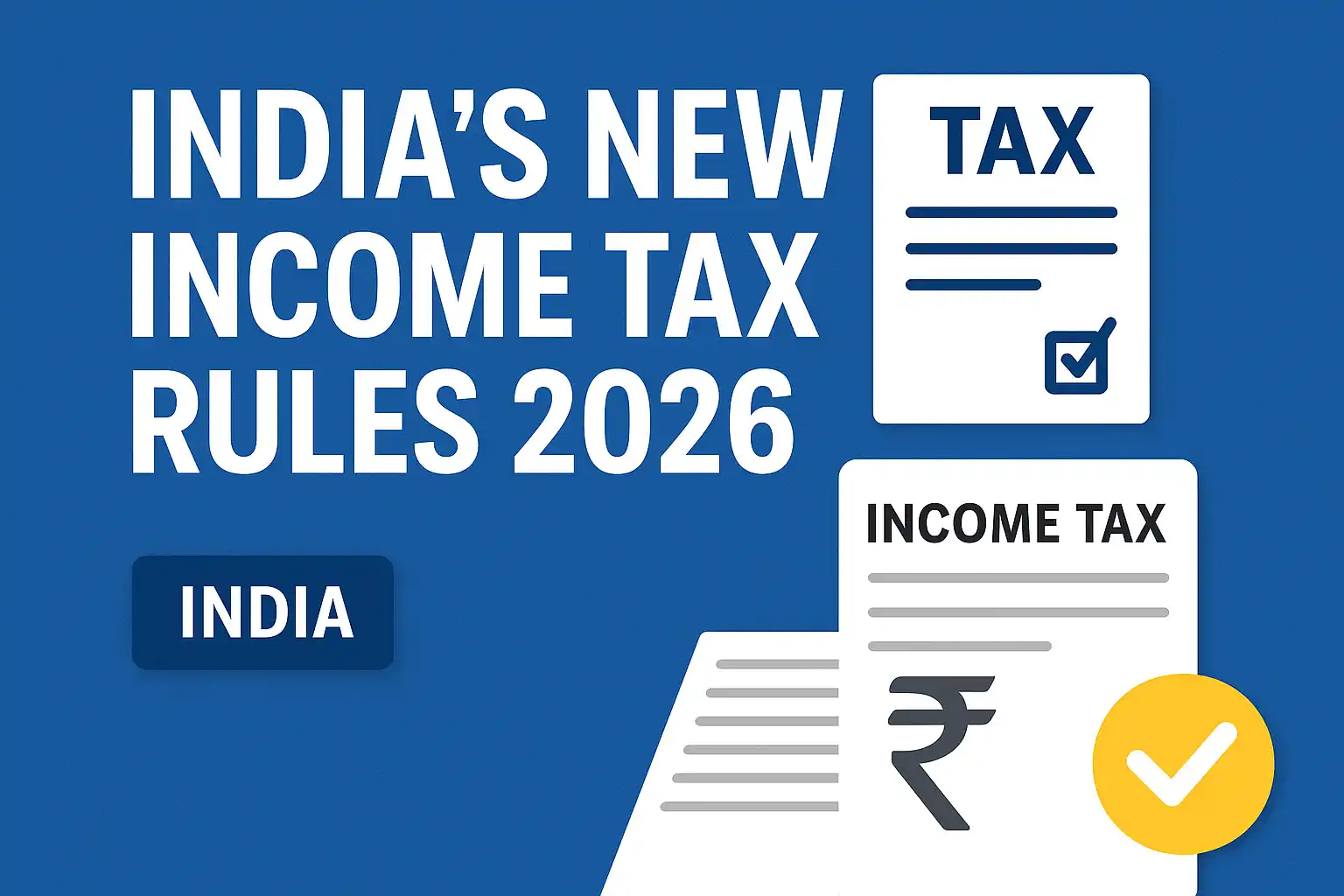
The Government of India is working to make the income tax system simpler, more digital, and less complicated. With reforms expected to take effect from 2026, the tax filing process is likely to become much easier for ordinary taxpayers.
In this article, we combine all recent developments and explain them in detail — including tax law changes, tax slabs, ITR filing process, form restructuring, revised return timelines, and future improvements.
New Income Tax Act 2025 — Biggest Reform
India has been operating under the Income Tax Act, 1961 for decades. The government is now preparing to replace it with the Income Tax Act, 2025, which is expected to become effective from 1 April 2026.
The objective of the new law is to:
- Simplify tax provisions
- Reduce complexity and lengthy sections
- Promote digital tax compliance
- Make compliance easier for taxpayers
This is considered one of the biggest tax reforms in recent decades.
Has the Tax Slab Changed?
There has been no major change in tax slab rates, but relief is provided through Section 87A rebate under the new tax regime.
Impact:
- Tax liability for individuals with taxable income around ₹12 lakh may effectively become very low or nil in many cases.
- Middle-class salaried taxpayers benefit more under the new regime.
The government is gradually encouraging taxpayers to shift toward the new regime.
Why Has ITR Filing Become Easier?
(A) Pre-Filled Return System
The income tax portal now automatically fills data such as:
- Salary income
- Bank interest
- TDS details
- Some investment information
In future, data from:
- Share transactions
- Mutual funds
may also be automatically integrated.
(B) Faceless Tax System
Now:
- No need to visit tax offices
- Notices and replies are online
- Appeals are digital
This reduces time, paperwork, and stress.
(C) Extended Return Correction Opportunity
If a mistake occurs while filing returns:
- Taxpayers can revise their returns later.
- Time limits are becoming more flexible under new rules.
Current ITR Form Structure
At present, the following ITR forms are used:
| Form | Used By |
| ITR-1 (Sahaj) | Salaried individuals |
| ITR-2 | Individuals without business income |
| ITR-3 | Business/profession income |
| ITR-4 (Sugam) | Small businesses/professionals |
| ITR-5 | Firms & LLPs |
| ITR-6 | Companies |
| ITR-7 | Trusts & institutions |
What Changes Are Expected in Form Numbers?
With the new Income Tax Act, form numbering and structure may change. Forms are expected to be reorganized to match the new law framework.
Based on proposed restructuring, possible changes may look like:
| Old Form | Possible New Form Number |
| Form 16 (Salary TDS) | Form 130 |
| Form 26AS | Form 168 |
| Audit Reports (3CD etc.) | Form 26 |
| Transfer Pricing Forms | Form 48 |
| Other certificates | New numbering expected |
Note: Final numbering will be confirmed only after official notification.
Revised Return Deadline Under New Rules
Under upcoming changes:
- Taxpayers may be allowed to revise returns up to 31 March of the following financial year.
- This provides more flexibility if errors occur during filing.
- Updated return filing timelines are also becoming more flexible to encourage voluntary compliance.
Tax Payment Has Become Easier
Tax payments can now be made instantly using:
- UPI
- Net Banking
- Debit Card
- Online challan system
In future, we may see:
- Automatic tax calculation
- Mobile-based tax payment systems
Relief in Foreign Spending (TCS Adjustments)
Changes in TCS on certain foreign expenditures help reduce cash blockage in cases such as:
- Overseas education
- Medical treatment
- Travel expenses
What Will the Future Tax System Look Like?
The government’s long-term goal:
- Tax filing as easy as using a mobile app
- Automatic data capture
- Faster refunds
- Fewer disputes and notices
Eventually:
- Small taxpayers may only need to confirm data
- The system could auto-calculate taxes
How Does This Affect Common Taxpayers?
| Earlier | Now / Future |
| Long forms | Simplified forms |
| Manual data entry | Auto-filled data |
| Office visits required | Fully online |
| Payment complexity | Instant online payment |
| Complex provisions | Simplified rules |
Who Benefits Most?
The biggest beneficiaries include:
- Salaried employees
- Small business owners
- Freelancers
- Middle-income taxpayers
Outcome
India’s tax system is moving from a complex structure toward a simplified digital compliance model.
Key takeaways:
✔ New Income Tax Act 2025 coming
✔ Simplified ITR forms
✔ Easier tax filing
✔ Flexible return correction options
✔ Increased automation in data reporting
Over the next couple of years, income tax filing is expected to become significantly simpler for most taxpayers.
Source: Income Tax Department updates and draft discussions related to the upcoming Income Tax Act.