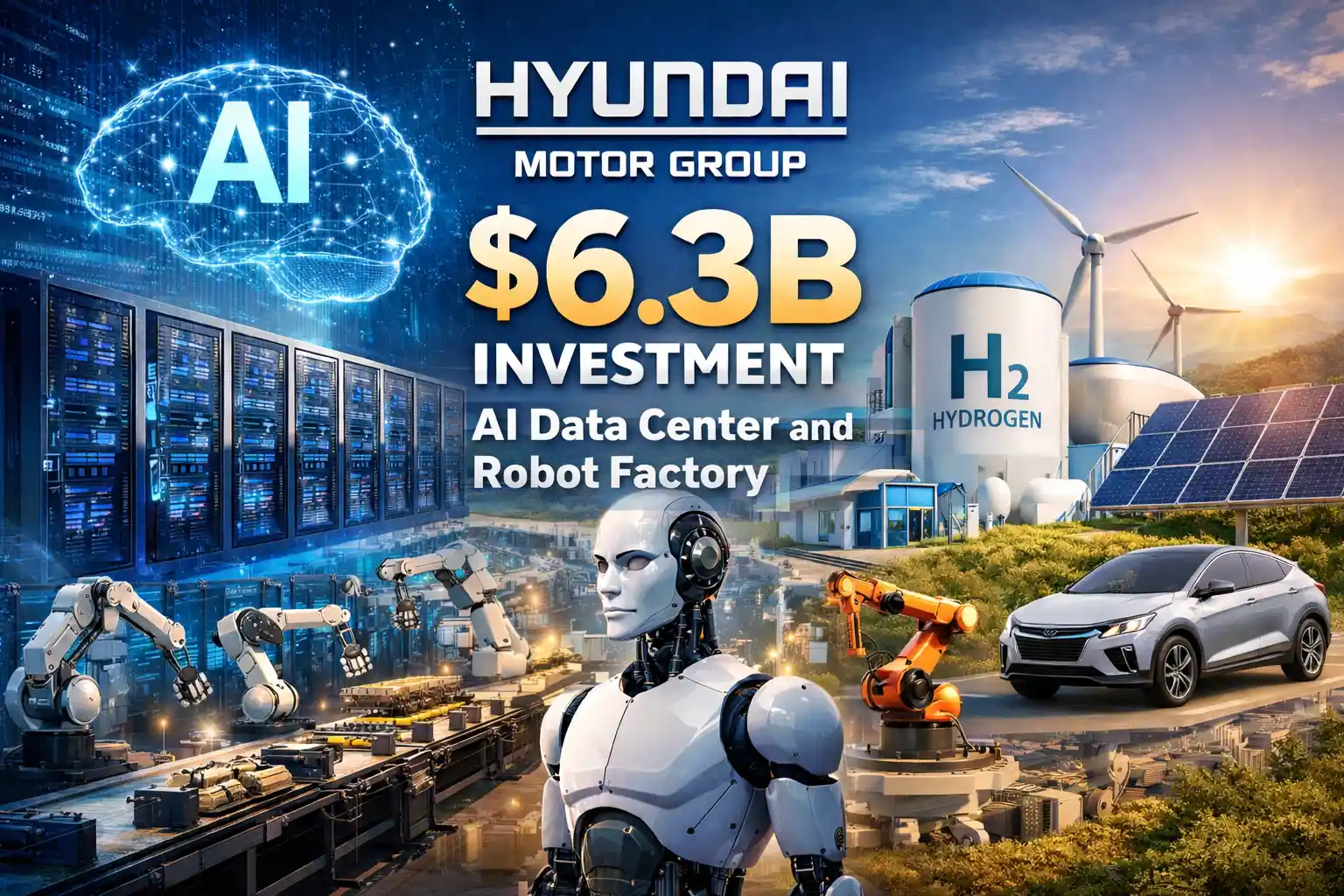
South Korean auto giant Hyundai Motor Group has announced a major investment of $6.3 billion (approximately 9 trillion won) to strengthen its position in future technologies. The company will develop a large-scale AI data center, robot manufacturing factory, hydrogen plant, and solar power infrastructure in the Saemangeum region of South Korea.
This move is seen as a significant step in Hyundai’s transition from a traditional automaker to an AI-driven mobility and robotics company.
What Is the Full Project About?
This is not just a factory project but a Future Industry Complex that will include four major components:
- AI High-Performance Data Center
- Robot Manufacturing Facility
- Hydrogen Production Plant
- Solar Power Infrastructure
Hyundai’s goal is to integrate AI research, advanced manufacturing, and green energy at a single location to reduce operational costs and accelerate technological development.
AI Data Center: The Brain of Hyundai’s Future Technology
The AI data center will be equipped with approximately 50,000 high-performance GPUs (Graphics Processing Units). This massive computing capacity will be used for:
- Training autonomous (self-driving) vehicle AI models
- Smart factory automation systems
- Industrial robot control platforms
- Big data analytics and simulation
Industry experts believe that this large-scale AI infrastructure could help Hyundai compete more effectively with global leaders in electric and autonomous mobility.
Robot Factory: Capacity of 30,000 Units Per Year
As part of the project, Hyundai will build a state-of-the-art robot manufacturing plant with the capacity to produce:
- 30,000 robots annually
- Industrial robots for logistics, warehouses, and manufacturing
- Wearable robots (exoskeleton systems)
- Service and automation robots
Hyundai has already been expanding its robotics business, and this investment aims to commercialize and scale up its robotics operations on a global level.
Hydrogen and Solar Energy: Focus on Sustainability
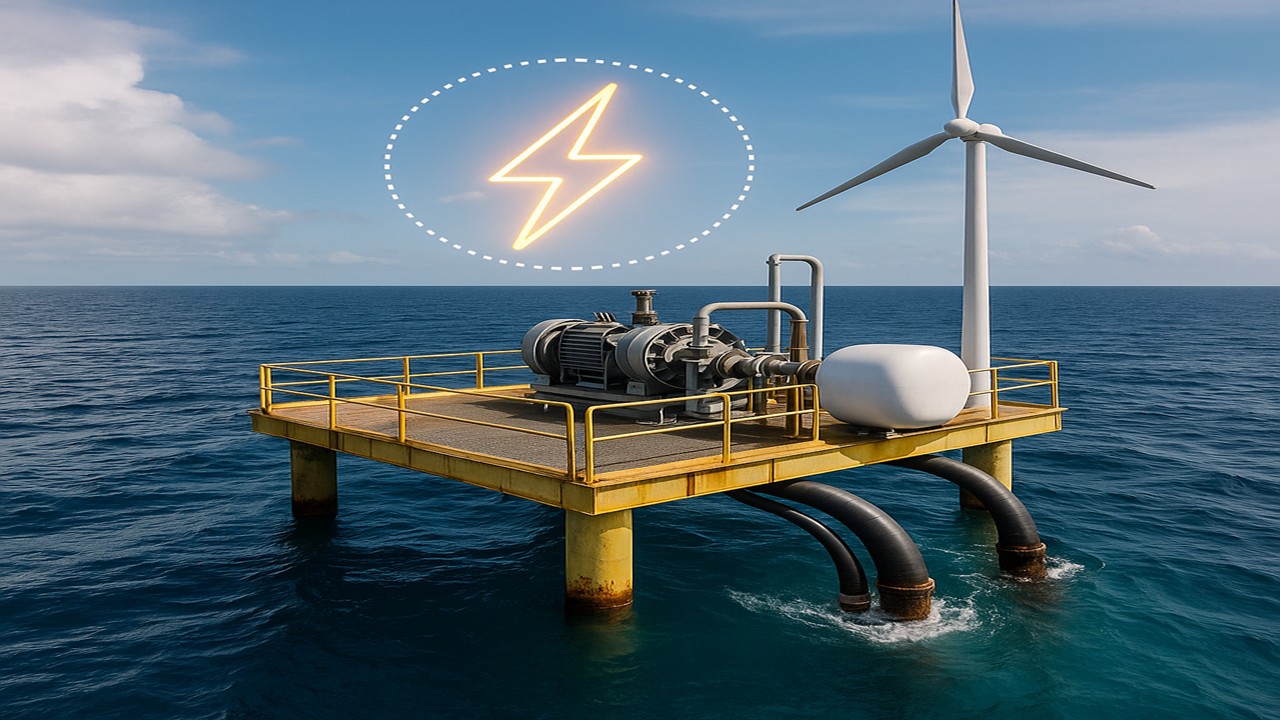
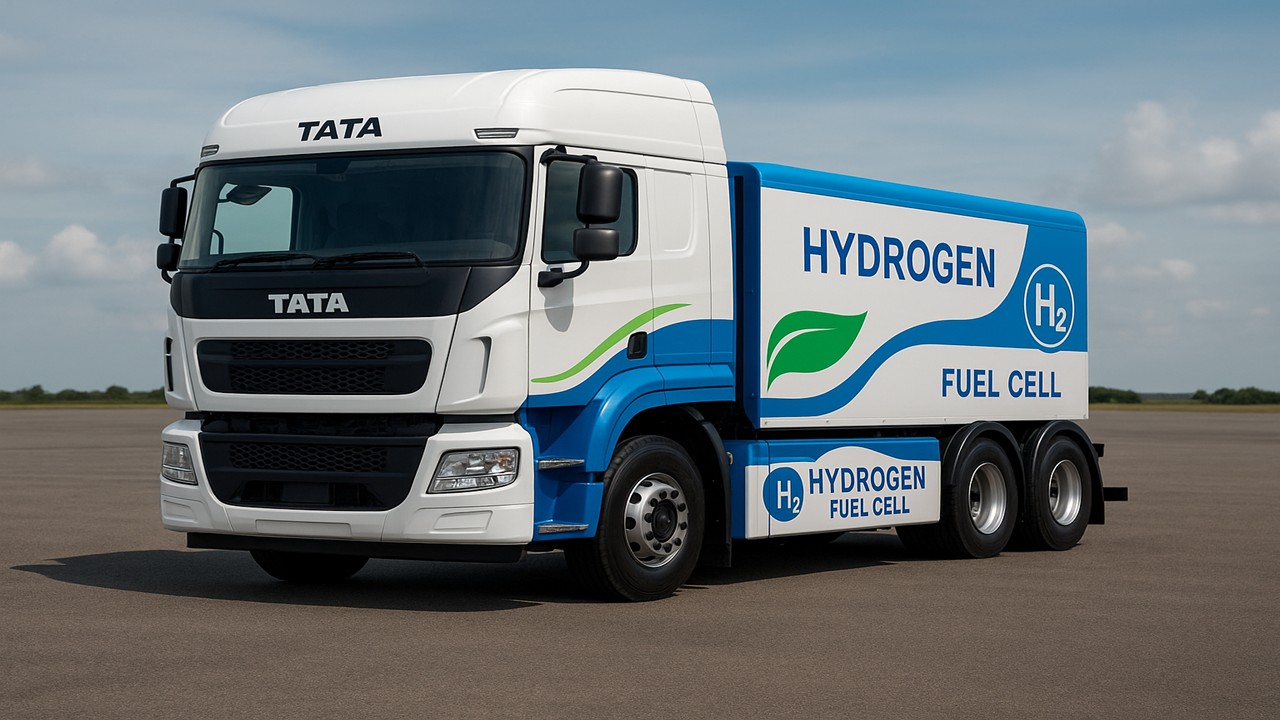
The project will also include a 200-megawatt hydrogen production plant. Hyundai considers hydrogen to be a key clean energy source for the future and has been actively developing hydrogen fuel cell vehicles.
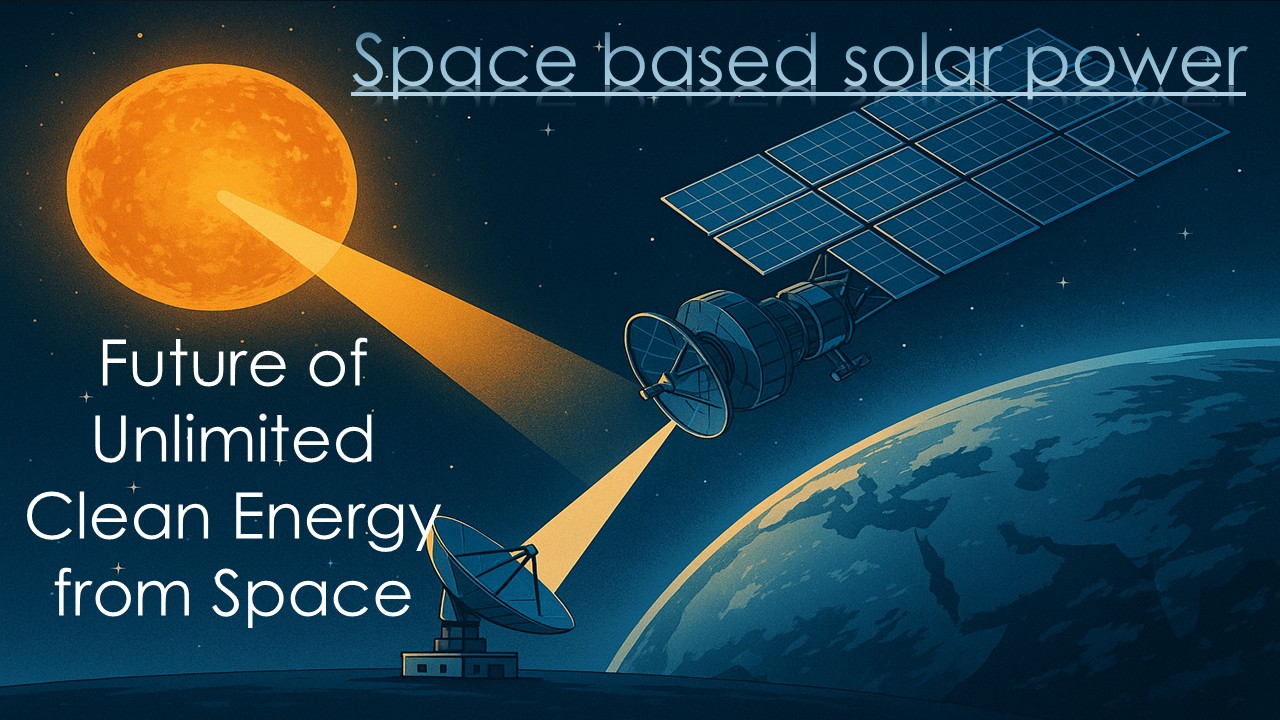
In addition, a large solar power system will be installed to:
- Supply electricity to the AI data center
- Reduce carbon emissions
- Increase the use of renewable energy
This aligns with Hyundai’s long-term carbon neutrality and sustainability goals.
Economic Impact: Jobs and Regional Development
The mega project is expected to:
- Create more than 70,000 direct and indirect jobs
- Boost local industries and supply chains
- Transform the Saemangeum region into a major technology hub
Government officials believe the investment will strengthen South Korea’s global competitiveness in AI and robotics.
A Strategic Shift in Hyundai’s Vision
This announcement clearly signals that Hyundai Motor Group no longer wants to be seen solely as a car manufacturer.
The company is repositioning itself as:
- An AI-powered mobility solutions provider
- A smart factory technology developer
- A robotics and green energy innovator
With rapid changes in the automotive industry — including electric vehicles, autonomous driving, and industrial automation — this strategic shift is considered highly significant.
Outcome
Hyundai’s $6.3 billion investment is not just an infrastructure expansion; it is a long-term bet on future technologies.
By combining AI, robotics, and green energy in one integrated ecosystem, the company aims to establish itself as a global technology leader in the coming years. If successful, Hyundai could emerge as a key player not only in the automotive sector but also in AI-driven industrial robotics and sustainable energy solutions.
Source: hyundaimotorgroup news