Artificial Intelligence (AI) is no longer just a futuristic concept—it has become one of the biggest business revolutions in history. In just a few years, AI has transformed from an experimental technology into a multi-trillion-dollar opportunity that is reshaping industries, financial markets, and global competition.
But while everyone talks about AI, a much bigger question is emerging:
Who will make the most money from AI in the next decade—the companies building AI infrastructure or the companies creating AI applications?
This is the next great battle in the AI industry. Investors, startups, and technology giants are all trying to answer the same question.
Understanding the AI Value Chain
AI is not a single product. It is an ecosystem where multiple layers work together.
A simple AI value chain looks like this:
AI Chips → Data Centers → Cloud Platforms → AI Models → AI Applications → End Users
Every layer depends on the one below it.
For example, when someone asks ChatGPT a question, thousands of GPUs inside data centers process that request. Those GPUs are connected through advanced networking systems, powered by cloud infrastructure, and then delivered through an AI application.
Without infrastructure, applications cannot exist.
Without applications, infrastructure has no customers.
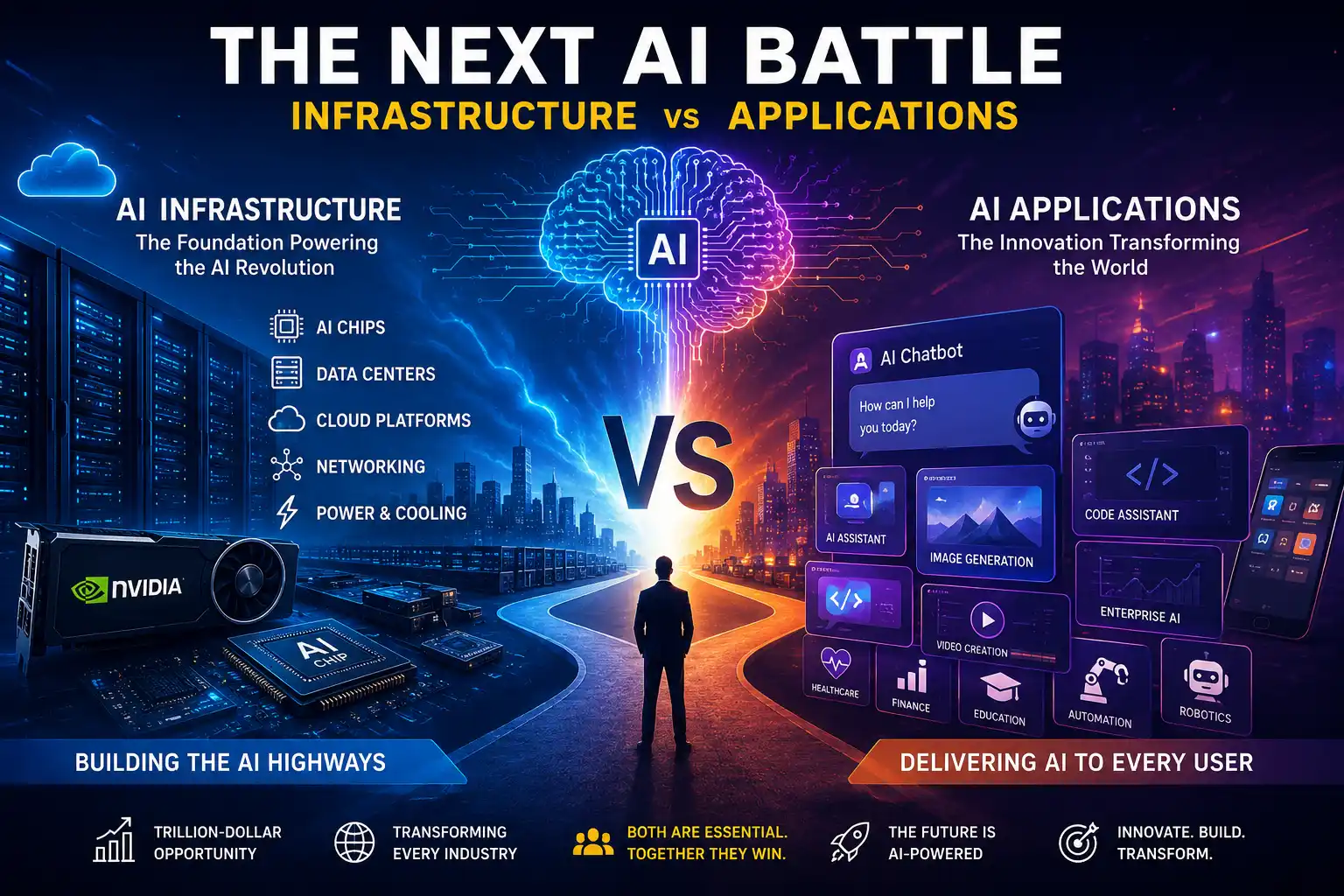
What Is AI Infrastructure?
AI infrastructure is the foundation that makes artificial intelligence possible.
It includes:
- High-performance AI chips
- Graphics Processing Units (GPUs)
- Cloud computing platforms
- AI data centers
- Networking equipment
- Storage systems
- Power and cooling infrastructure
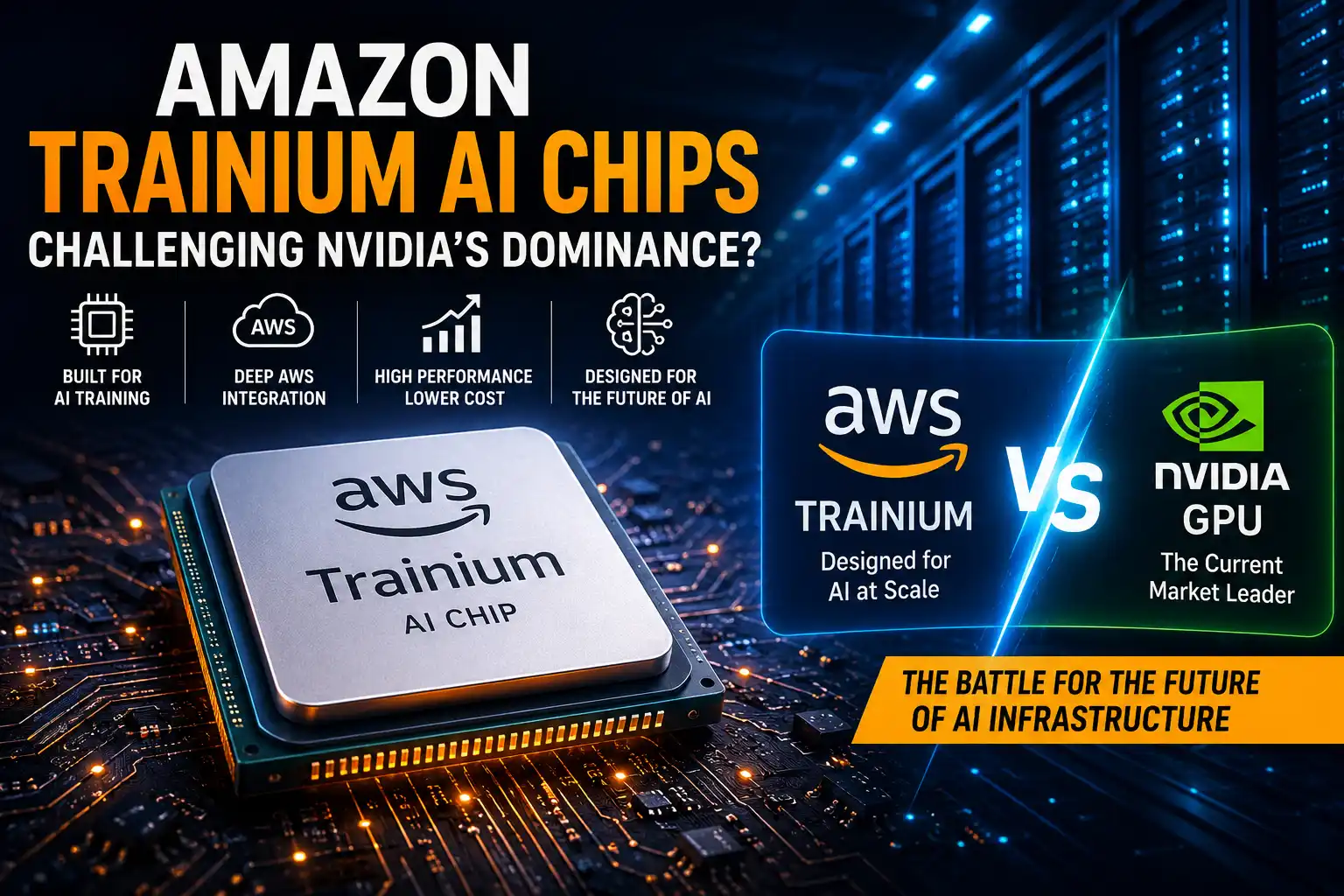
Companies investing heavily in AI infrastructure include NVIDIA, AMD, Microsoft, Amazon, Alphabet, Oracle, and Broadcom.
These companies are spending hundreds of billions of dollars building the digital highways that AI applications use every day.
One of the biggest examples is Microsoft’s massive investment in AI data centers to support cloud services and enterprise AI. Similarly, Amazon Web Services (AWS) continues expanding its AI cloud infrastructure as businesses increasingly adopt generative AI.
What Are AI Applications?
AI applications are the products that people actually use.
These include:
- AI chatbots
- AI coding assistants
- Image generation tools
- Video creation software
- AI healthcare platforms
- AI financial assistants
- AI customer support systems
- AI business automation tools
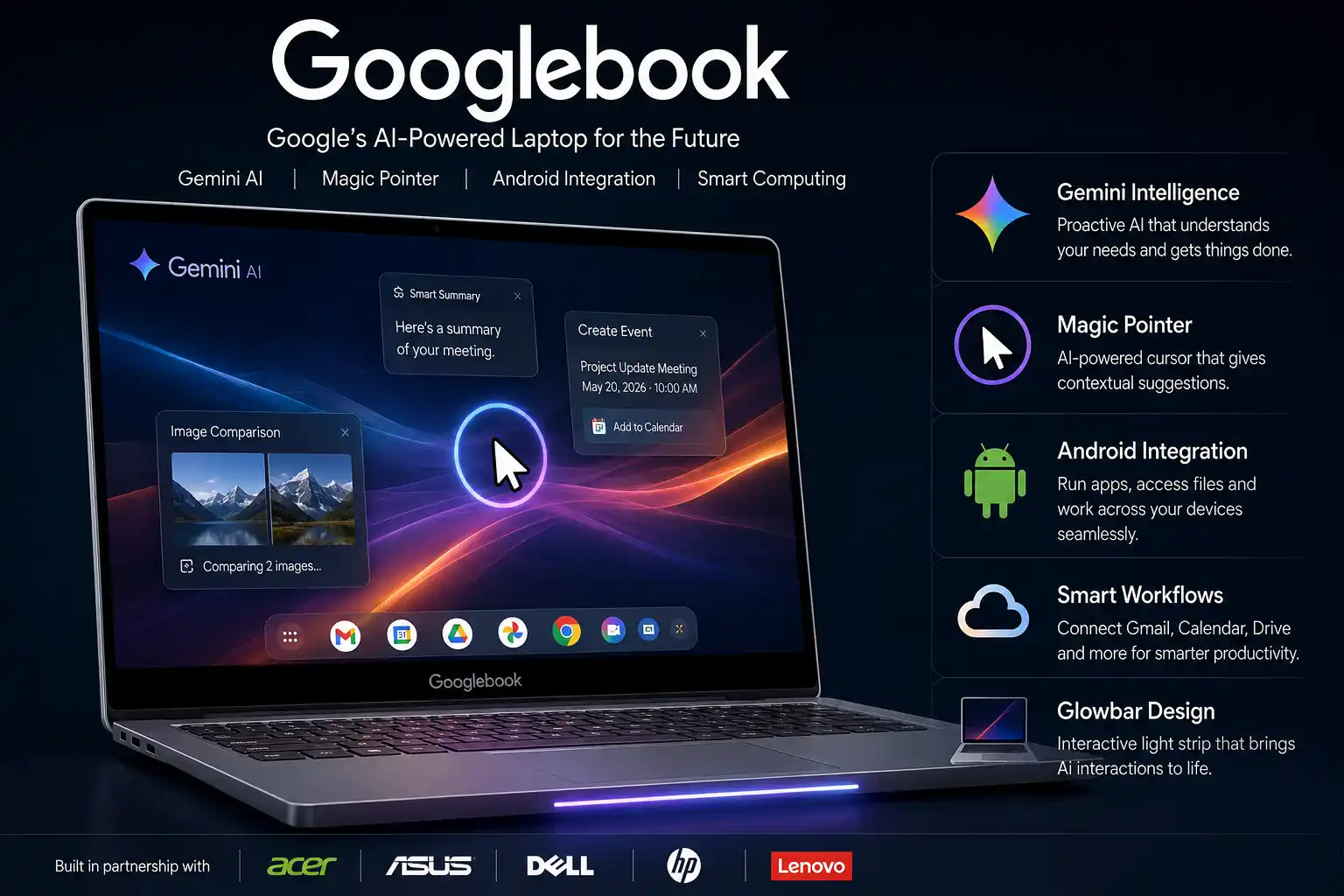
Examples include ChatGPT, Claude, Gemini, Microsoft Copilot, Cursor, Midjourney, and many enterprise AI platforms.
These applications solve real-world problems by making AI useful for consumers and businesses.
While infrastructure companies build the roads, application companies build the vehicles that travel on them.
Why Infrastructure Is Winning Today
If we look at 2026, infrastructure companies are currently capturing a significant share of AI spending.
Why?
Because every AI company needs computing power.
Whether it is OpenAI, Anthropic, Meta, or thousands of startups, they all require enormous numbers of AI chips and cloud servers.
This creates consistent demand for infrastructure providers.
The situation is similar to the California Gold Rush. During the gold rush, many miners failed to find gold.
However, the companies selling shovels, tools, and equipment made steady profits regardless of who discovered gold.
Today’s AI infrastructure companies play a similar role. They provide the “digital shovels” for the AI revolution.
Why AI Applications Could Become Even Bigger
Infrastructure creates the foundation.
Applications create the customer experience.
History shows that platforms often become valuable, but consumer applications can become even larger businesses.
Think about the internet.
The internet itself changed the world, but companies like Google, Amazon, Netflix, Uber, and Airbnb created enormous value by building services on top of internet infrastructure.
AI could follow the same pattern.
As AI becomes more accurate and affordable, businesses will increasingly pay for software that automates work rather than simply paying for computing power.
Enterprise AI assistants, AI-powered healthcare, legal research, finance, education, manufacturing, and robotics all represent enormous growth opportunities.
The next trillion-dollar AI company may not necessarily build chips—it may build the world’s most widely used AI application.
Infrastructure vs Applications: Which Has the Better Business Model?
Both sides have unique strengths.
Infrastructure businesses require massive investments in hardware, electricity, networking, and data centers.
The barriers to entry are extremely high, which protects established players. However, growth often depends on continuous capital spending.
AI application companies usually require less physical infrastructure.
Once an application gains millions of users, software can scale rapidly with relatively lower costs.
However, competition is intense.
New AI applications appear almost every week, making it difficult to maintain long-term leadership.
This means infrastructure businesses generally enjoy stronger competitive advantages, while applications often offer faster innovation and customer growth.
Where Is the Money Flowing?
One of the biggest trends in 2026 is the surge in AI investment.
Major technology companies are investing hundreds of billions of dollars in AI infrastructure, including new data centers, specialized AI chips, and cloud capacity.
At the same time, venture capital firms continue investing heavily in AI application startups across healthcare, finance, cybersecurity, education, software development, and manufacturing.
This shows that investors are not choosing one side over the other. They are investing across the entire AI ecosystem.
Challenges for Both Sides
Neither infrastructure nor applications have an easy path.
Infrastructure companies face challenges such as:
- Rising electricity demand
- Supply chain constraints
- High capital expenditure
- Chip shortages
- Environmental concerns
Application companies face different risks:
- Rapid competition
- Customer acquisition costs
- AI model licensing expenses
- Data privacy regulations
- Monetization challenges
Success will depend on continuous innovation rather than simply launching an AI product.
The Future of the AI Industry
The AI industry is gradually shifting from experimentation to commercialization.
The first phase focused on building powerful AI models.
The second phase is about building infrastructure to support those models.
The third phase, which is already beginning, is about integrating AI into every industry.
Healthcare, finance, education, retail, logistics, manufacturing, media, and customer service are all becoming AI-powered. As this transformation accelerates, demand for both infrastructure and applications will continue to grow together.
Outcome
The next AI battle is not about choosing between infrastructure and applications.
It is about understanding how both depend on each other.
Infrastructure companies provide the computing power, cloud platforms, and hardware that make AI possible.
Application companies transform that computing power into products that solve real-world problems.
In the short term, infrastructure companies may continue benefiting from the massive wave of AI investment.
In the long term, AI applications could create entirely new industries and some of the world’s most valuable businesses.
The biggest winners may not be those who build the fastest chips or the smartest chatbot alone—but those who successfully connect powerful infrastructure with practical, everyday AI solutions.
As the AI revolution continues, one thing is becoming increasingly clear: the future belongs not to infrastructure or applications alone, but to the ecosystem that combines both into scalable, profitable, and widely adopted innovations.